
Granada, Nicaragua: The Hidden Cost of a Cheap Escape
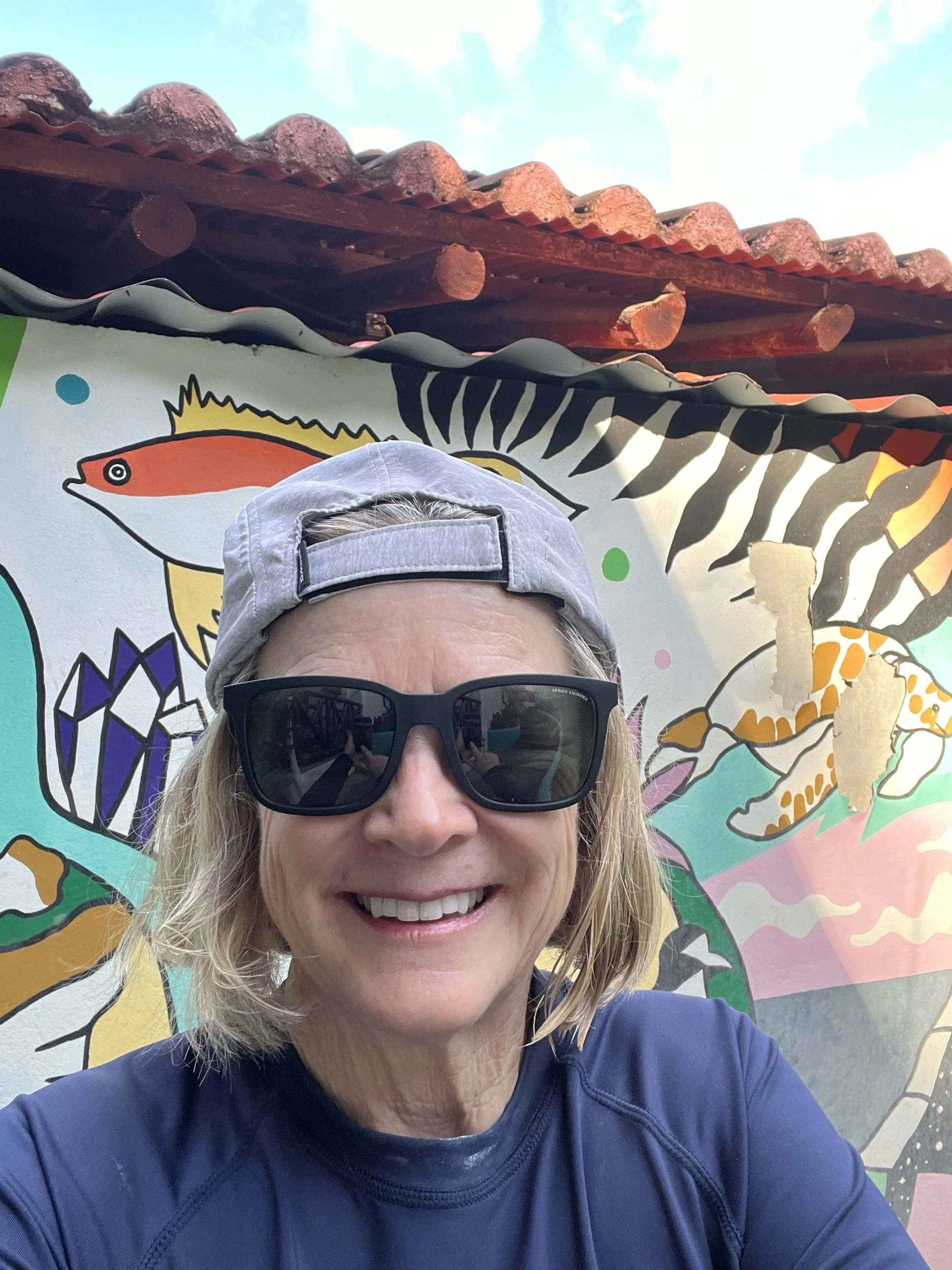
A snapshot of pure adventure from three years ago — rash guard still wet and smeared with sunblock, and the giddy feeling of still saying yes.
Back then, a hostel running thin on supplies or fraying around the edges felt like part of the rustic, off-the-beaten-path experience. I read it as freedom, not fragility.
Today, I see that memory differently. Budget travel depends on more than cheap beds and good vibes. It depends on trust, civic stability, and the freedom of local people to speak, host, help, and be themselves.
That hidden infrastructure matters. Photos by Step Bold | stepbold.co | @lateinlifecareers
Why This Colonial Jewel No Longer Works for Solo Women Travelers
For years, Nicaragua was one of the great “value propositions” for adventurous solo travelers.
It offered dramatic coastlines, colonial architecture, volcanoes, warm weather, and a lower price point than neighboring Costa Rica. For travelers willing to trade polish for immediacy, Nicaragua felt like a find.
Three years ago, a cautious, experienced solo traveler could still navigate it.
Today, the math has changed.
This is the hardest part of writing about Granada: I loved what I found there. I loved the color, the heat, the lake light, the open doorways, the colonial courtyards, the bell towers, the kindness that appeared exactly when I needed it.
And I am not currently recommending that you go.
Not because Granada stopped being beautiful.
Because beauty is no longer enough.
⚠️ Travel Note: I am not currently recommending travel to Nicaragua, especially for solo women travelers. This essay reflects my experience from three years ago, considered against current political conditions, serious travel advisories, weakened civic institutions, and the risks of traveling independently in an authoritarian state.
Nicaragua’s people are not their government. That distinction matters.
The Road to Granada
Three years ago, I climbed into the weather-beaten bed of a 4x4 after two weeks near San Juan del Sur, moving carefully by then, my body pushed to its limits from surf, heat, dirt roads, and the strange elation of having said yes to something hard.
The road was rough.
It was magnificent.
Towering trees lined both sides, their canopies filtering the tropical sun into shifting patterns across the dust. A turquoise fence ran along the road, broken by cactus, wooden shelters, and the small evidence of daily life: shade, fruit, waiting, conversation.
The air smelled of warm dust, green foliage, and distant woodsmoke.
This was the Nicaragua I fell for — rugged, vivid, unpolished, alive.
At the time, I thought: Yes. Still yes.
I encouraged women in our over-60 solo travel community to train for it. Know your body. Know your limits. Build strength. Go carefully. But go.
That was then.
Now, looking back, I understand something differently. What once felt like off-the-beaten-path charm also revealed the fragility of the systems underneath. Roads, hostels, informal transport, small guesthouses, independent guides — all the things that make budget travel feel intimate and possible also depend on trust, stability, and freedom.
When those erode, the bargain changes.
The Chicken Bus to Granada
The chicken bus to Granada charged along Lake Nicaragua, clattering through the heat.
Children in immaculate Catholic school uniforms carried bright backpacks, escorted by young mothers with dark,shiny hair pulled into tidy buns. The light shifted quickly — soft and forgiving one moment, searing the next.
Solo travel sharpens my senses.
I notice more. Listen longer. Linger freely.
That is one of its gifts.
By the time the bus reached Granada’s terminal, the air was shimmering. Even the fittest travelers paused, steadying themselves against the warmth.
A kindhearted man saw me orienting myself and gestured me toward a waiting cab. He made sure I understood where to go. The exchange was brief, practical, and generous.
That sort of kindness has saved me more than once on the road.
We moved through streets blurred in mango, raspberry, lime. Granada announced itself in color.
When the cab stopped before my lavender guesthouse trimmed in ivory, I knew immediately: this was where I would rest.
My hosts were gracious and composed. The husband helped arrange day tours. His elegant wife walked me through Granada’s dining scene with the precision of someone who knew exactly what mattered after a long travel day: where to eat, where to walk, where to be careful, when to return.
That mattered.
For solo women travelers, local human infrastructure is everything.
Not just roads and hotels.
People.
The person who points you to the honest cab. The host who tells you which street to avoid after dark. The guide who knows when weather is turning. The café owner who notices who is lingering too long near your table.
Independent travel works because of these quiet networks of trust.
In Nicaragua today, that trust operates under pressure.
And that changes everything.
Walking the Colonial Streets
Granada reveals itself slowly.
No tour guide. No rigid itinerary. Just the pull of curiosity through streets once plundered by pirates and adventurers.
Horse-drawn carriages moved along narrow lanes lined with terra-cotta roofs and massive arched timber doors. I walked, always walking, along cobblestones and painted walls.
Calle La Calzada — the pedestrian spine running off the main square — was busy with strollers, vendors, tourists, restaurants, and the familiar rhythm of a colonial city that had learned how to perform itself for visitors.
By the lake, I imagined the pirates who once stormed this harbor. Captain Henry Morgan attacked Granada in the 1600s, burned buildings, and escaped with silver through Nicaragua’s waterways.
The water, that day, was glassy and calm.
Vendors sold drinks of crushed fruit and ice from small bags, sealed neatly with tape. Children moved through the heat. Couples lingered. Travelers drifted between restaurants and plazas.
It was dreamlike.
It was easy to understand why Granada had become the kind of place budget travelers talked about in reverent shorthand:
Cheap meals. Colonial architecture. Volcano views. Warm nights. A sense of discovery without the European price tag.
But affordability is not the same as safety.
And cheapness always raises a question:
Who is absorbing the hidden cost?
The Myth of the Perfect Budget Destination
Three years ago, Nicaragua felt like an unusually affordable destination.
Today, I would not describe the lower cost as a simple travel advantage.
A low price can mean many things. It can mean favorable exchange rates, less-developed tourism infrastructure, fewer international chains, or a destination still outside the mainstream.
But in a country under authoritarian pressure, low prices can also reflect something else: weakened institutions, reduced oversight, fewer protections, economic desperation, and a population forced to work within constraints travelers may not see.
For younger backpackers, that may still feel like adventure.
For solo women travelers — especially women over 60 traveling independently — it is a different calculation.
We are not just asking:
Can I afford this?
Is it beautiful?
Will I meet interesting people?
Can I get by on a smaller budget?
We are also asking:
What happens if I get sick?
What happens if I am stopped or questioned?
Who can I call if something goes wrong?
Are local people free to help me?
Does my presence put anyone else at risk?
Am I relying on systems that no longer function predictably?
That is the hidden architecture of travel safety.
And in Nicaragua, that architecture has weakened.
Climbing the Bell Tower
I climbed the bell tower of Iglesia de Guadalupe carefully, one deliberate step at a time.
At the top, the view opened wide.
Granada Cathedral commanded the plaza. Lake Nicaragua sparkled against a sapphire sky. Mombacho Volcano watched from the distance, ancient and sure.
It was one of those travel moments that seems to gather centuries into a single breath.
Church towers do that. They lift you above the heat and noise of the street. They make a city legible. They let you believe, briefly, that beauty can organize everything.
But churches in Nicaragua are not neutral spaces now.
The Ortega-Murillo government has targeted clergy, religious orders, Catholic institutions, and civil society groups for years. Priests have been arrested, expelled, silenced, or forced into exile. Religious processions have been restricted. Catholic charities and institutions have faced closures and state pressure.
So when I look back at that bell tower now, I do not see only the view.
I also see the risk surrounding the people who maintain these sacred places, pray inside them, speak from their pulpits, or remain silent because silence is safer.
To treat Nicaragua’s churches as simple photo opportunities now would feel dishonest.
The architecture is still breathtaking.
The context has changed.
What the Doorways Hide
From the street, Granada’s exteriors can look modest: colored walls, heavy wooden doors, high windows, a hint of shadow behind ironwork.
Step closer, and the world changes.
Black-and-white tilework gleams. Vaulted beamed ceilings rise. Long corridors stretch into shade. Open courtyards offer fountains, plants, and a sudden drop in temperature that feels almost miraculous after the heat outside.
At night, I couldn’t resist glancing through open doorways into lamp-lit rooms: mahogany rocking chairs set for evening conversation, low carved tables ready for grandparents’ stories, ornate desks glowing in warm light.
Overhead, the sky blazed with stars.
A breeze drifted in from Lake Nicaragua carrying the faintest whisper of water.
This is what Granada does so well.
It hides its lushness.
It makes you work for the interior.
It rewards curiosity.
And that is exactly why it is so hard to let go.
Because the charm is real.
The danger is not that Granada is fake.
The danger is that beauty can persuade you to minimize the risk.
Budget Travelers, I See You
I need to say this carefully, because I was once a budget traveler and still am sometimes.
I understand the romance of stretching a dollar. I understand the backpacker mantra of “until the money runs out.” I understand impromptu dinners, shared tour vans, volcano day trips, cheap guesthouses, fast friendships, and the strange intimacy of people who meet for a day and remember each other for years.
Some of my richest travel memories came from that world.
But budget traveler culture can also be a poor measure of safety.
Backpackers are often lagging indicators. They may continue drifting into places long after the risk calculus has changed because their tolerance for discomfort is high, their planning horizon is short, and their sense of personal vulnerability may be low.
That does not make them bad travelers.
It makes them unreliable risk assessors for a 60-plus solo woman traveler.
My community is not traveling with the same margin for error as a 22-year-old who can sleep badly, eat recklessly, lose a phone, hitch a ride, and turn a frightening night into a story.
For solo women over 60, the stakes are different.
A medical emergency, a legal misunderstanding, a corrupt official, a transportation failure, a predatory traveler, or a local person too afraid to intervene can have consequences that are not romantic, funny, or easily recoverable.
So no, I do not take my safety cues from backpacker forums and Instagram influencers showing cheap beers, rooftop sunsets, and “Nicaragua is totally fine” captions.
I know what they are seeing.
I also know what they may be missing.
The Hidden Architecture of Risk
Here is what matters now.
Independent travel depends on invisible infrastructure:
Functioning emergency care
Reliable transportation
Trustworthy local advice
Freedom of movement
Freedom of speech
Consular access
Legal predictability
Local people who can help without fear
Civic institutions that still operate
A press and civil society strong enough to expose abuses
When that infrastructure weakens, the traveler becomes more vulnerable — even if the streets still look calm.
That is the hardest lesson of Nicaragua.
The country still offers colonial beauty, volcanic landscapes, wild surf, and lower prices.
But a lower price is not a bargain if it requires you to surrender too much safety, autonomy, or peace of mind.
For solo women travelers, especially those of us in later chapters of life, the question is not:
Can I still manage it?
We probably can.
The better question is:
Is this a risk worth accepting now?
For me, the answer is no.
Granada’s Window Is Closed
When we roam alone, we move into a world brimming with possibility — accompanied by our own strength, curiosity, discipline, and the unexpected bonds that find us along the way.
Granada gave me that.
Centuries-old cathedrals beside volcanic horizons. Cobblestones whispering of conquistadors and poets. Open doorways revealing fountains, tiled floors, carved wood, and living history.
Spanish colonial splendor without the long-haul flight or European price tag.
A tropical city layered with five hundred years of story and spirit.
For travelers with strength in their stride and curiosity as their compass, Granada once delivered something rare: beauty, affordability, connection, and immediacy.
It was unpolished.
It was generous.
It was profoundly alive.
And now, for the kind of independent solo travel I write about, the window has closed.
I am grateful I went.
I am not currently sending you.
That is the boundary.
Step Bold. Travel Light. Feel Deeply.
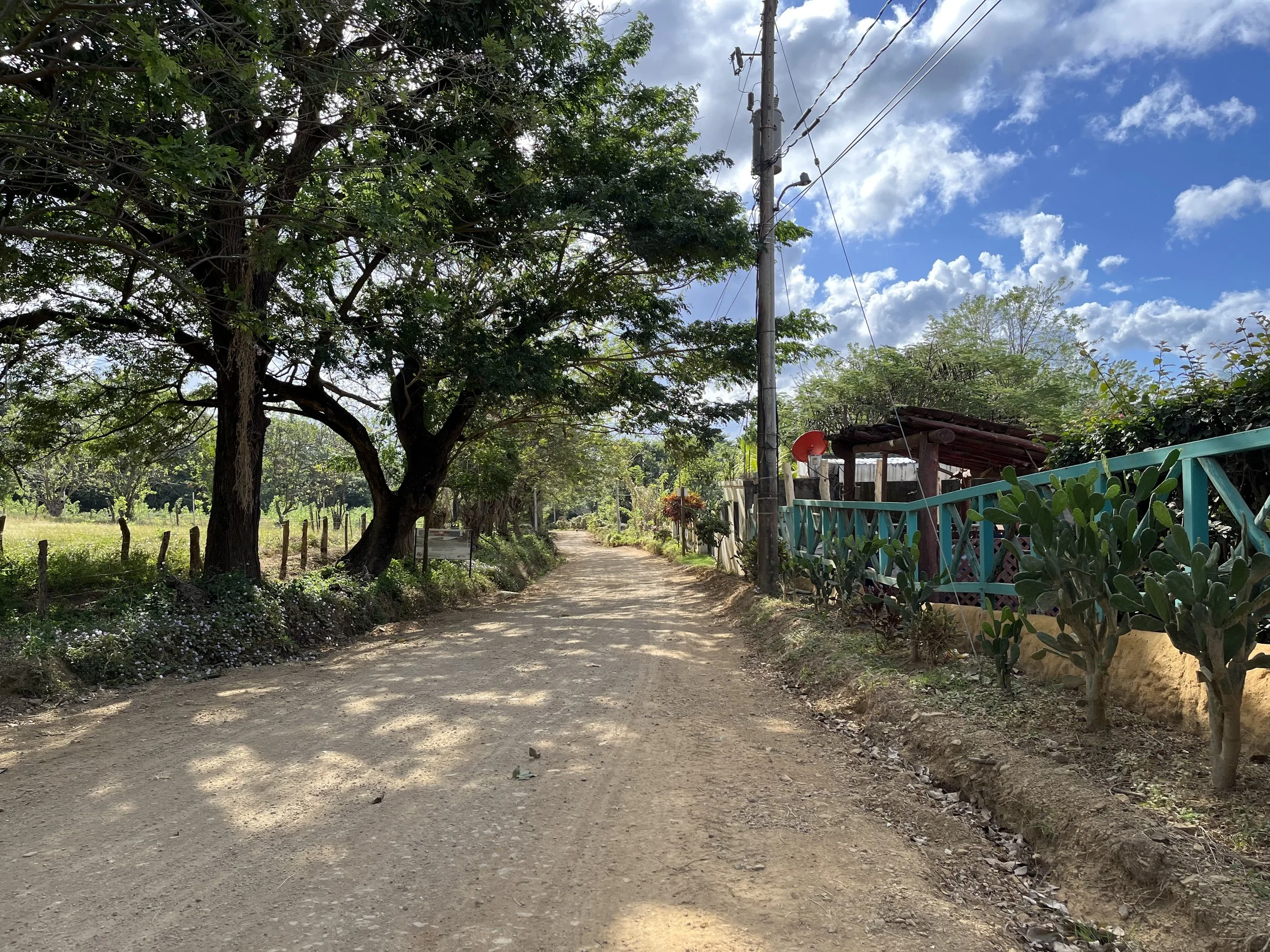
The road outside San Juan del Sur: dusty, beautiful, and rough enough to feel like a badge of honor.
Three years ago, riding these back roads in a beat-up truck felt like the price of admission to a more immediate Nicaragua — less polished, more alive.
Today, the danger isn't the ravines—it's the police. These secondary beach roads are now heavily monitored by a paranoid state, with arbitrary checkpoints designed to control the population and scrutinize outsiders. What used to be a gateway to freedom is now a corridor of state control.
The road was magnificent.
The math has changed.
Photos by Step Bold | stepbold.co | @lateinlifecareers
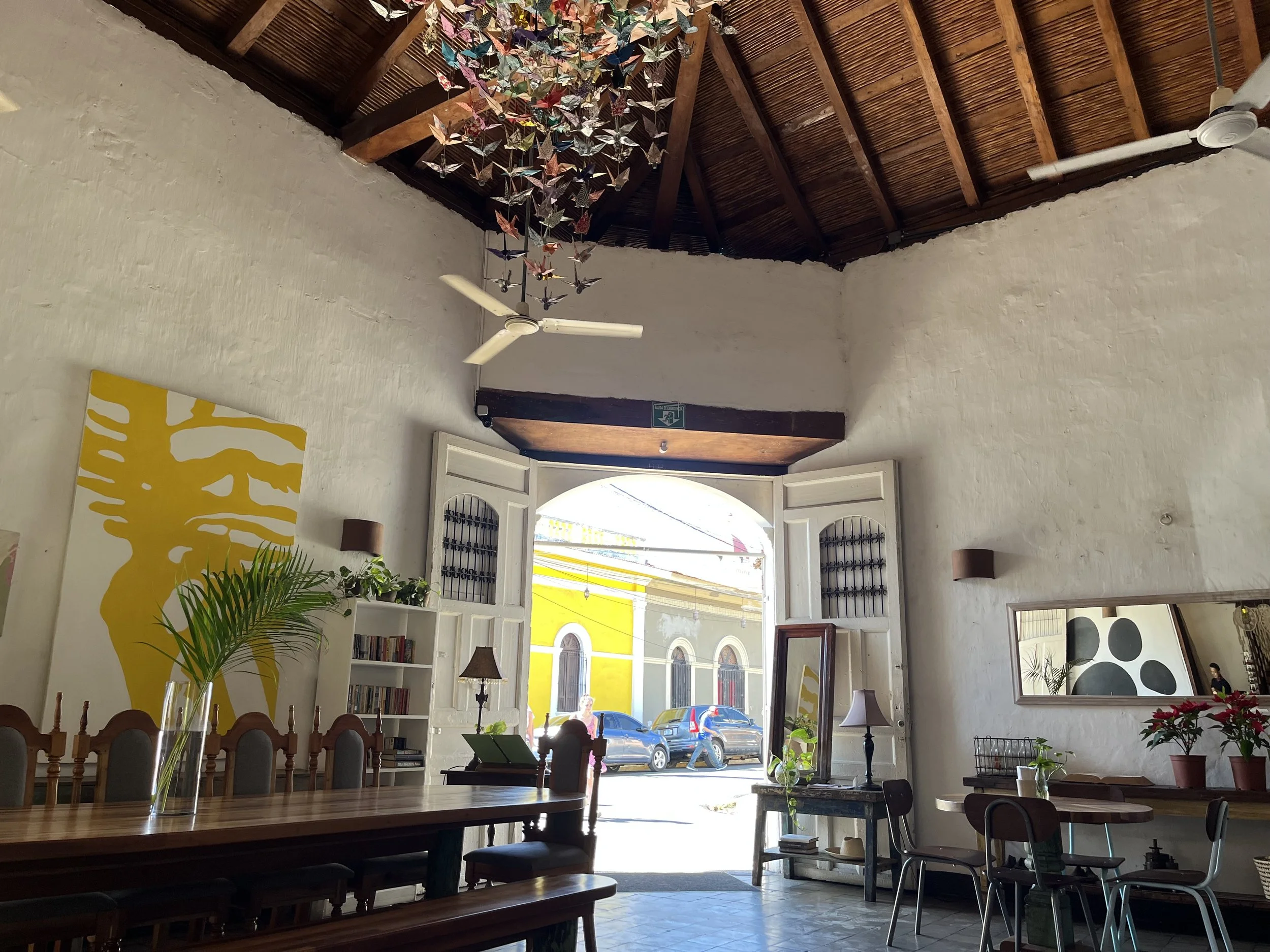
Interior The Garden Café - Granada, view to street through open door
This is what Granada does so well: it hides cool, gracious interiors behind modest colonial facades.
Inside, the city softens — high ceilings, open doors, art, shade, and a glimpse back to the street blazing outside.
Behind this beautiful photo, the owners have had to fight tooth and nail through rolling blackouts, astronomical municipal tax hikes designed to squeeze private businesses, supply chain collapses, and the sudden evaporation of free-spending Western tourists. Photos by Step Bold | stepbold.co | @lateinlifecareers
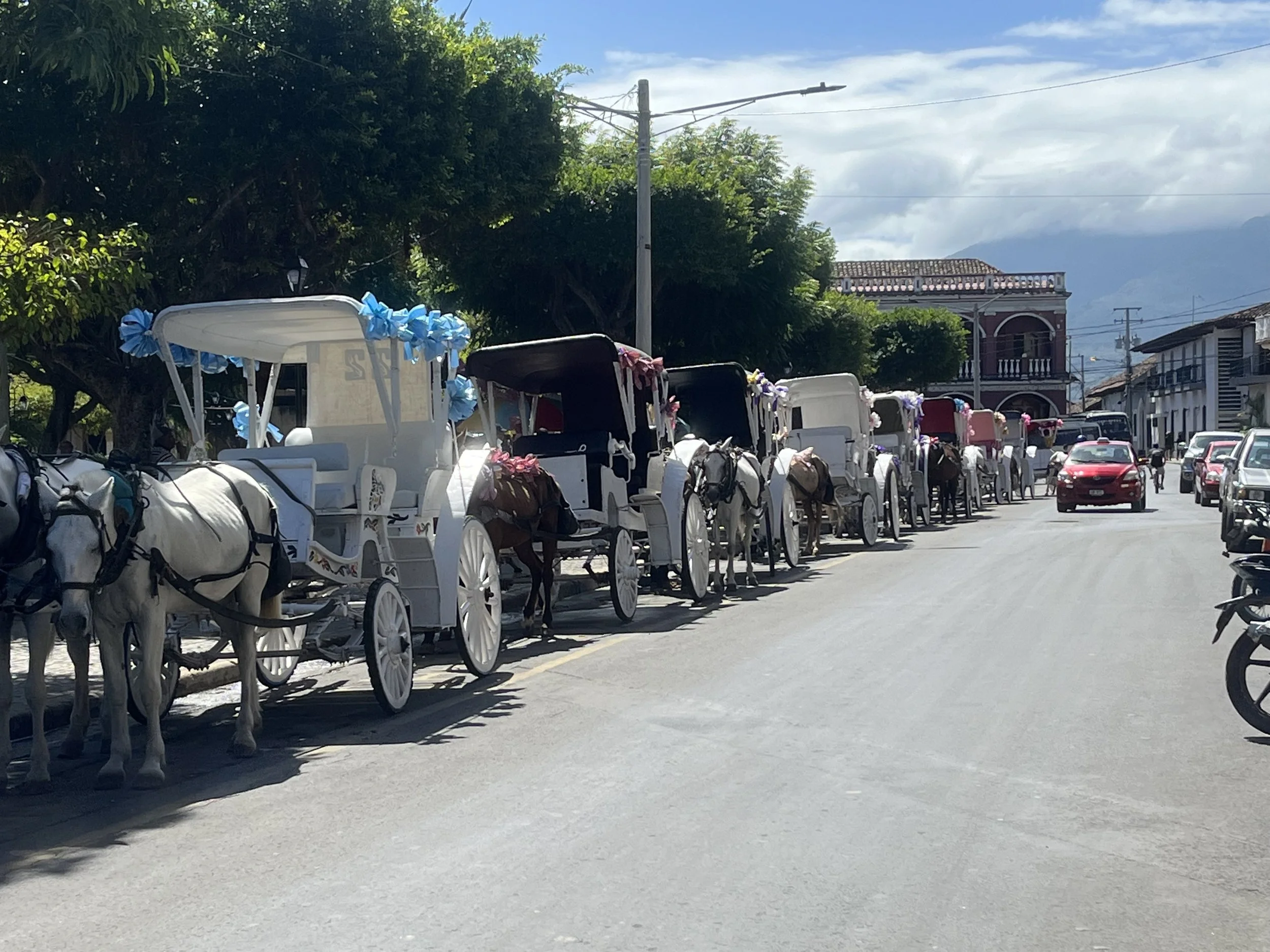
Line of horse-drawn carriages Granada, Nicaragua: A beautiful facade of tradition masking a desperate economy. Granada’s iconic horse-drawn carriages still line up along the park. Now the long line isn't due to high demand, but a lack of it. Drivers wait hours for a single fare in a city hollowed out of independent Western travelers. While the ride itself is physically safe, the lighthearted, chatty charm of the past has been replaced by a tense, transactional silence. Photos by Step Bold | stepbold.co | @lateinlifecareers
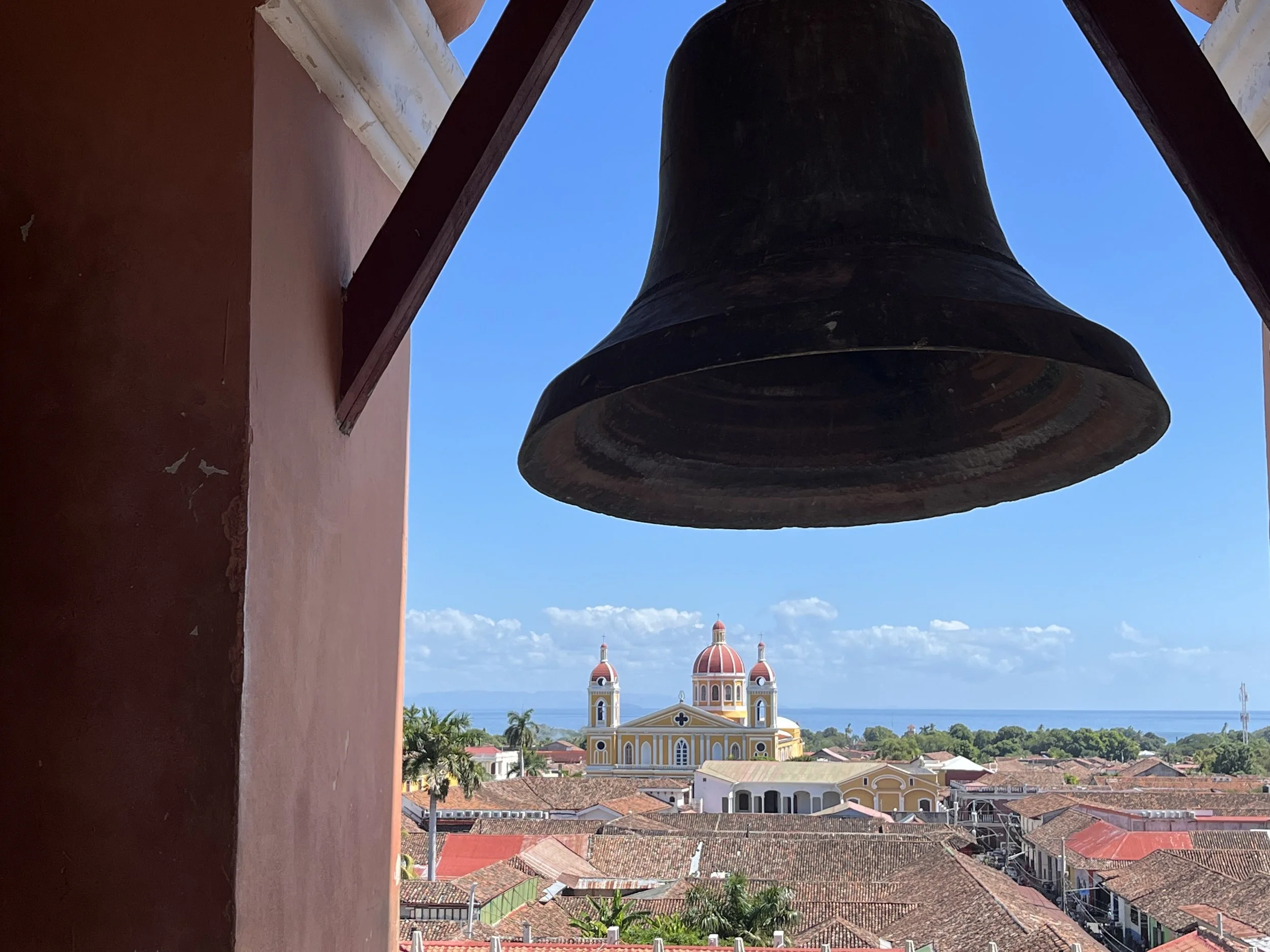
Catedral de Granada Cathedral photo through Iglesia de Guadalupe bell tower, Granada
From the bell tower of Iglesia de Guadalupe, Granada opens in layers: tiled rooftops, Catedral de Granada (Our Lady of the Assumption Cathedral), Lake Nicaragua, and Mombacho Volcano beyond.
The physical view of the Granada Cathedral, Lake Nicaragua, and the Mombacho Volcano remains stunning, but the act of ascending the tower of the Iglesia de Guadalupe is now deeply compromised. The regime is hyper-paranoid about people taking photos or video from high vantage points. If you returned and a local caretaker let you up into the tower out of kindness, you would be putting that person at risk of immediate interrogation, loss of their job, or arrest under anti-espionage and "cybercrimes" laws. Photos by Step Bold | stepbold.co | @lateinlifecareers
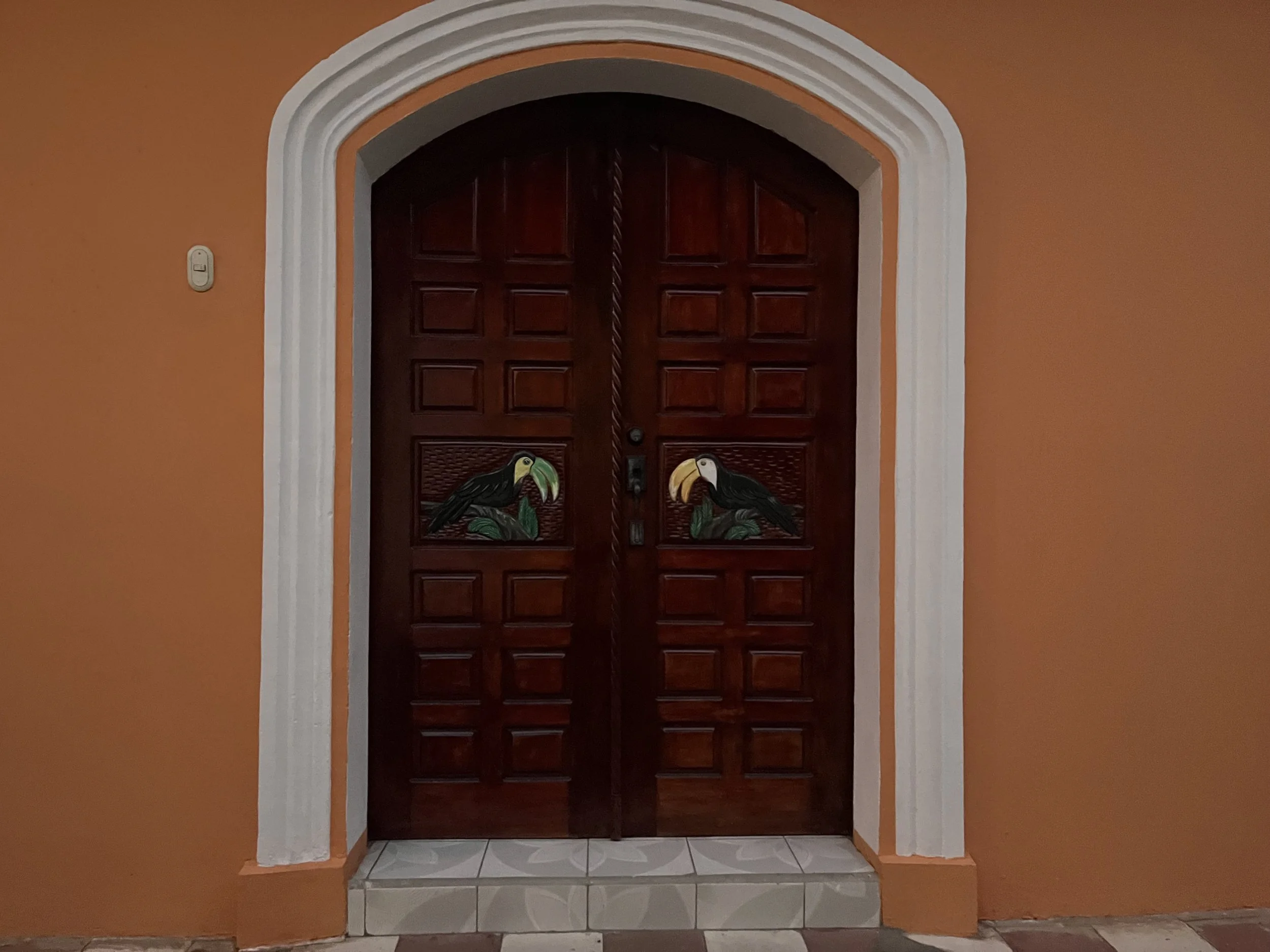
Carved Double door with toucan art, Granada, Nicaragua
The art of survival—and what we lose. You see the breathtaking craftsmanship that once made wandering Granada an unscripted joy: a stunning timber door adorned with hand-carved toucans against a vibrant terracotta wall. Three years ago, I took this photo with total peace of mind. Today, I wouldn't dare. Stopping to photograph a private entrance now triggers the intense paranoia of a police state, where neighborhood informants view every camera lens as a tool for espionage. Worse yet, many of these sumptuous, tightly locked homes have been violently confiscated from their rightful owners by the regime. The vibrant colors remain, but the people who built this beauty have been forced into exile. Photos by Step Bold | stepbold.co | @lateinlifecareers
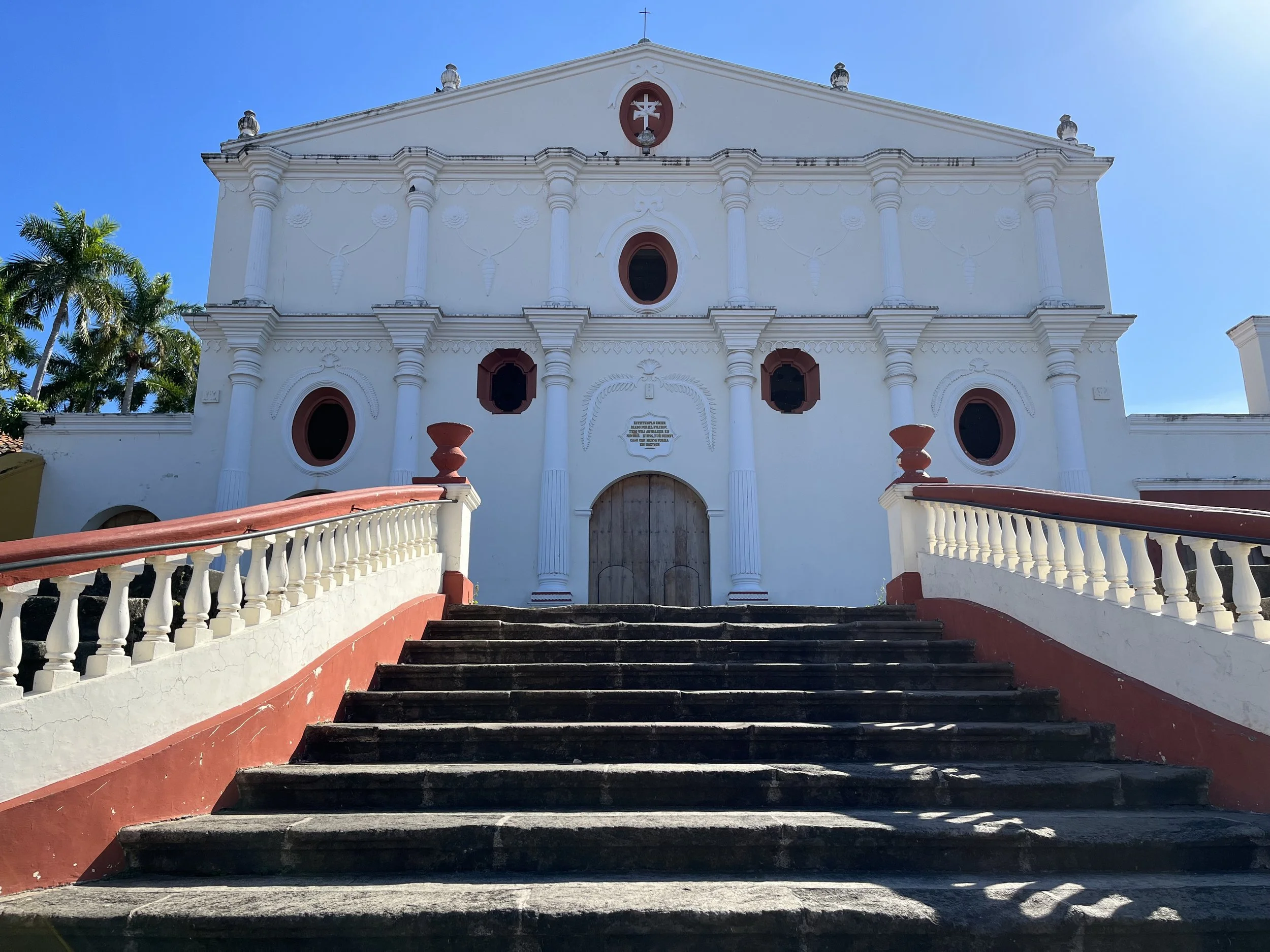
Iglesia de San Francisco, Granada, Nicaragua
The grand steps of Iglesia de San Francisco — white facade, red trim, blue sky, and the stillness of a church that has watched centuries pass.
Three years ago, this was a peaceful monument to history and I felt a warm, shared connection. Today, it stands as a symbol of endurance. The Ortega-Murillo regime has spent the last few years waging an aggressive war on the Catholic Church, exiling priests, banning public processions, and seizing church property. The beauty remains, but the freedom inside has been silenced. If you go to Mass at Iglesia de San Francisco today, you aren't a guest of a local spiritual tradition; you are participating in a staged, heavily policed ritual where the priest is a hostage, the pews are monitored, and the congregation is paralyzed by fear. Photos by Step Bold | stepbold.co | @lateinlifecareers
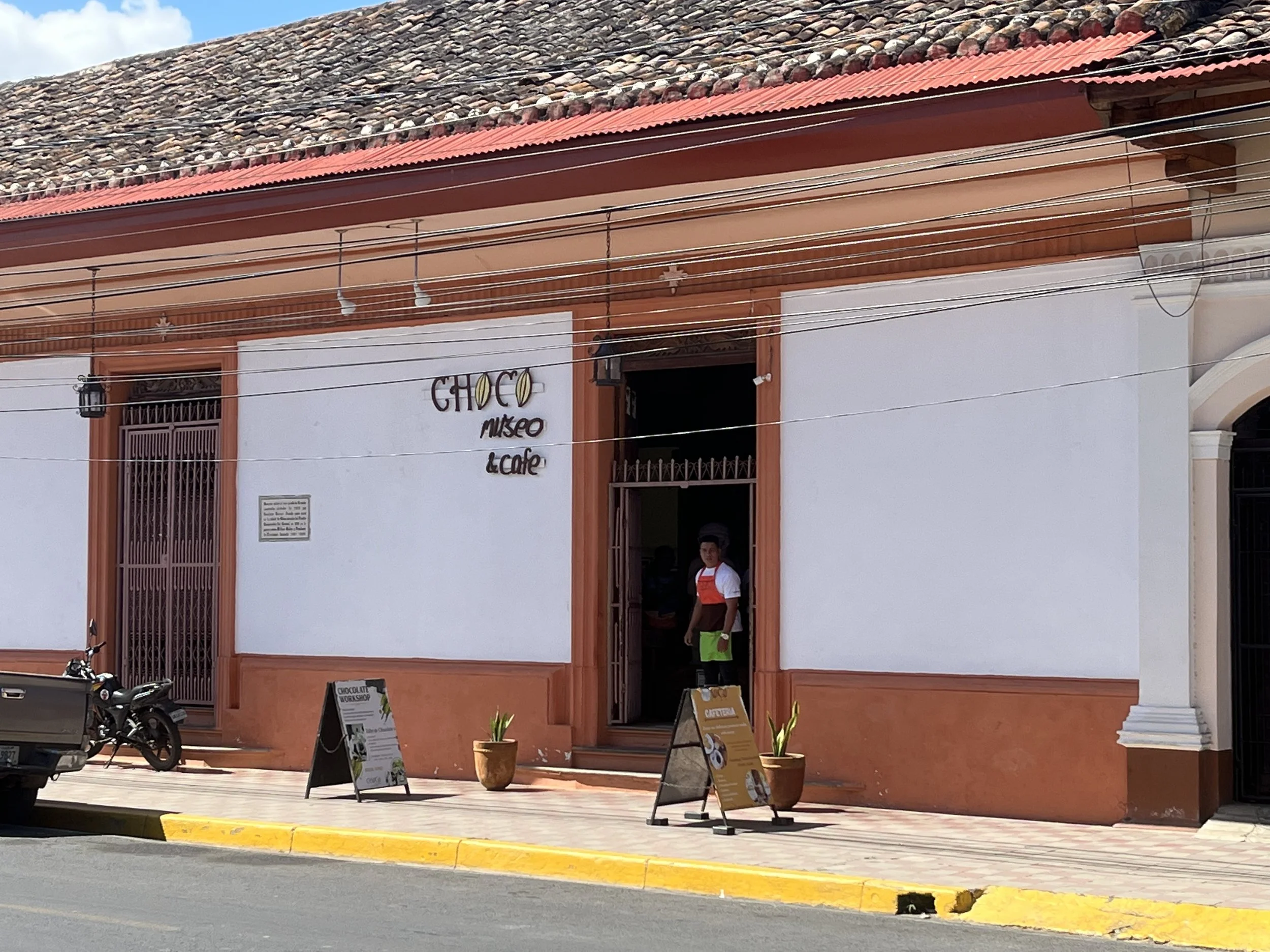
Choco Museo & Café, Granada, Nicaragua
Granada’s colonial facades are part of the spell: clay roof tiles, pale walls, warm trim, open doors, and a street that seems to invite you in.
This is why Granada worked so well on travelers. It made discovery feel easy.
A museum café. A chocolate workshop. A shaded doorway. A reason to pause.
The lovely facade of La Sultana reminds us why we fell in love with Granada’s architecture. Today, these beautiful buildings serve as golden cages. For a solo woman traveler, entering these spaces feels normal, but you are navigating a grid where an innocent photo pointed the wrong way down this street could end in a legal nightmare. Photos by Step Bold | stepbold.co | @lateinlifecareers
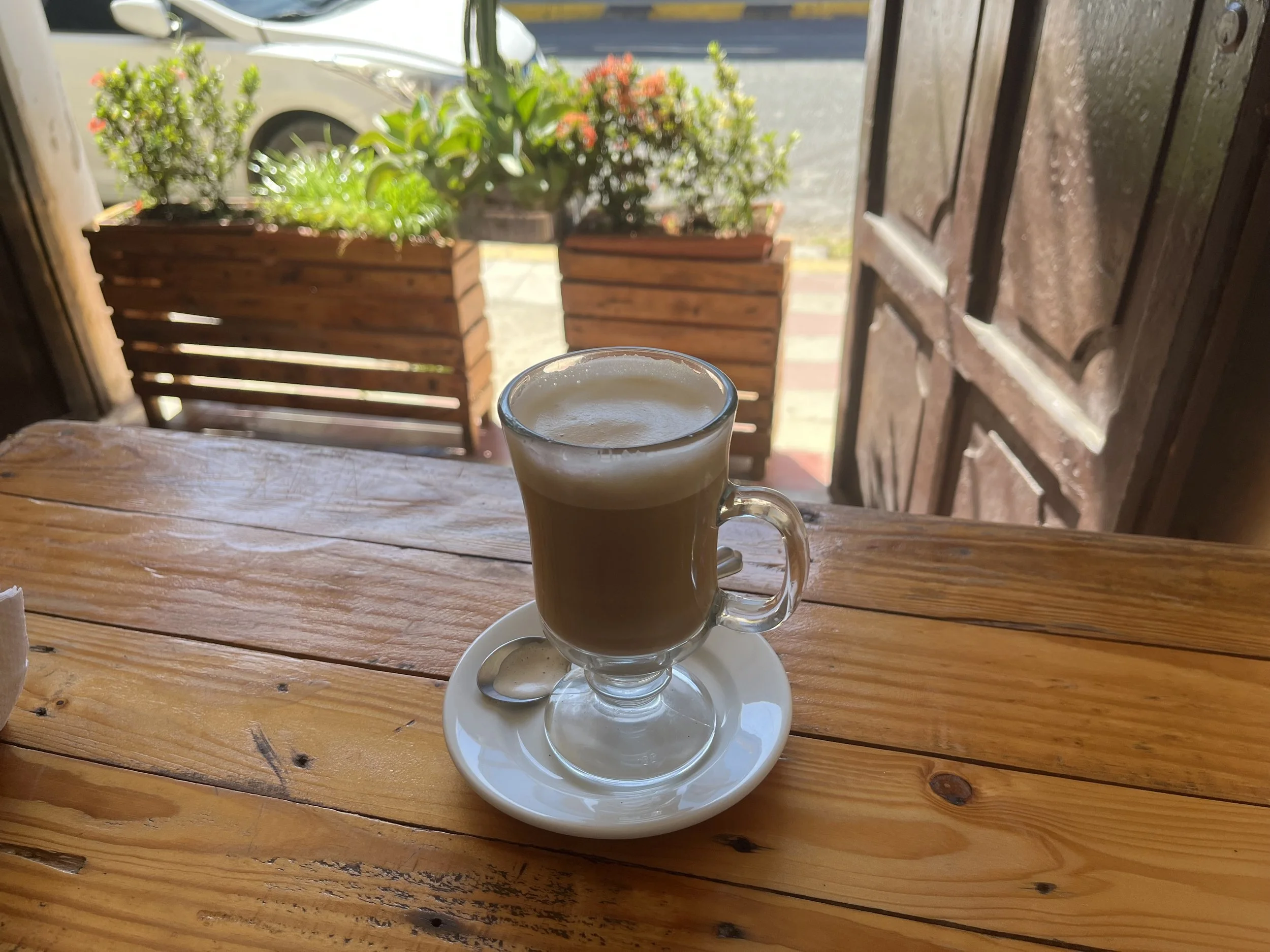
La Sultana, Granada, Nicaraga
A peaceful cup of coffee in Granada — quiet, shaded, and almost impossibly still.
This is the part that makes the boundary difficult. You can still find moments of inspiration here. You can still sit by an open wooden door, feel the air shift, and understand why travelers fell so hard for this city. But the tranquility is deceptive. Step outside this wooden door, and you enter a hyper-surveilled state. This coffee may be cheap, but it costs you the peace of mind of knowing that the locals serving you are living under constant psychological pressure. Photos by Step Bold | stepbold.co | @lateinlifecareers
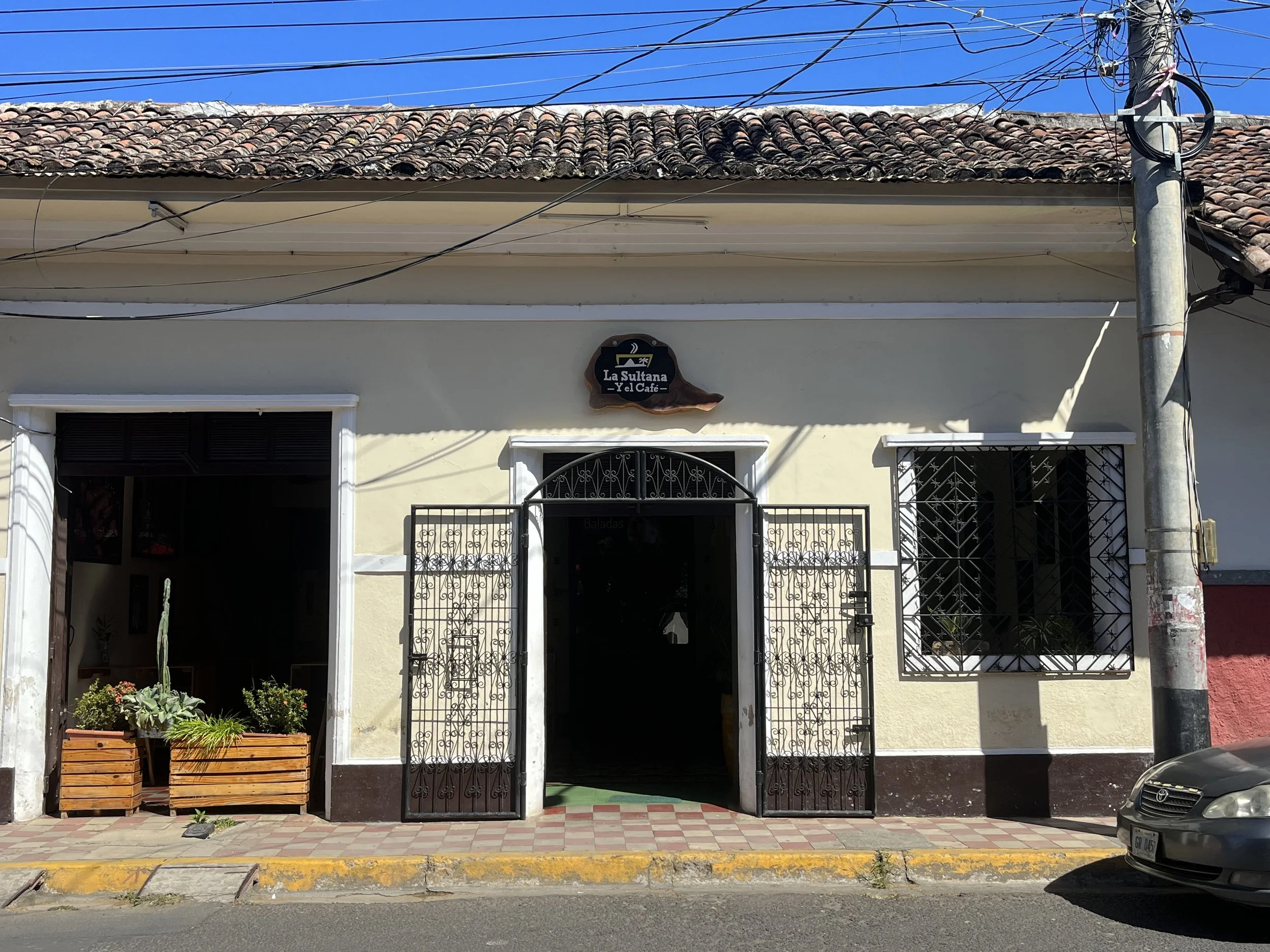
La Sultana exterior, Granada, Nicaragua
Behind closed doors.
The lovely facade of La Sultana shows exactly why Granada’s architecture lingers in memory: cream-colored walls, wrought iron, clay tiles, and the promise of a cooler world inside.
Granada has always been a city of thresholds — modest from the street, lush beyond the doorway.
But today, those thresholds carry more weight. For a solo woman traveler, entering beautiful private spaces may feel normal, but independent travel depends on more than charm. It depends on whether the people hosting, serving, guiding, and helping you can do so freely and safely.
That is the hidden infrastructure I no longer take for granted. Photos by Step Bold | stepbold.co | @lateinlifecareers
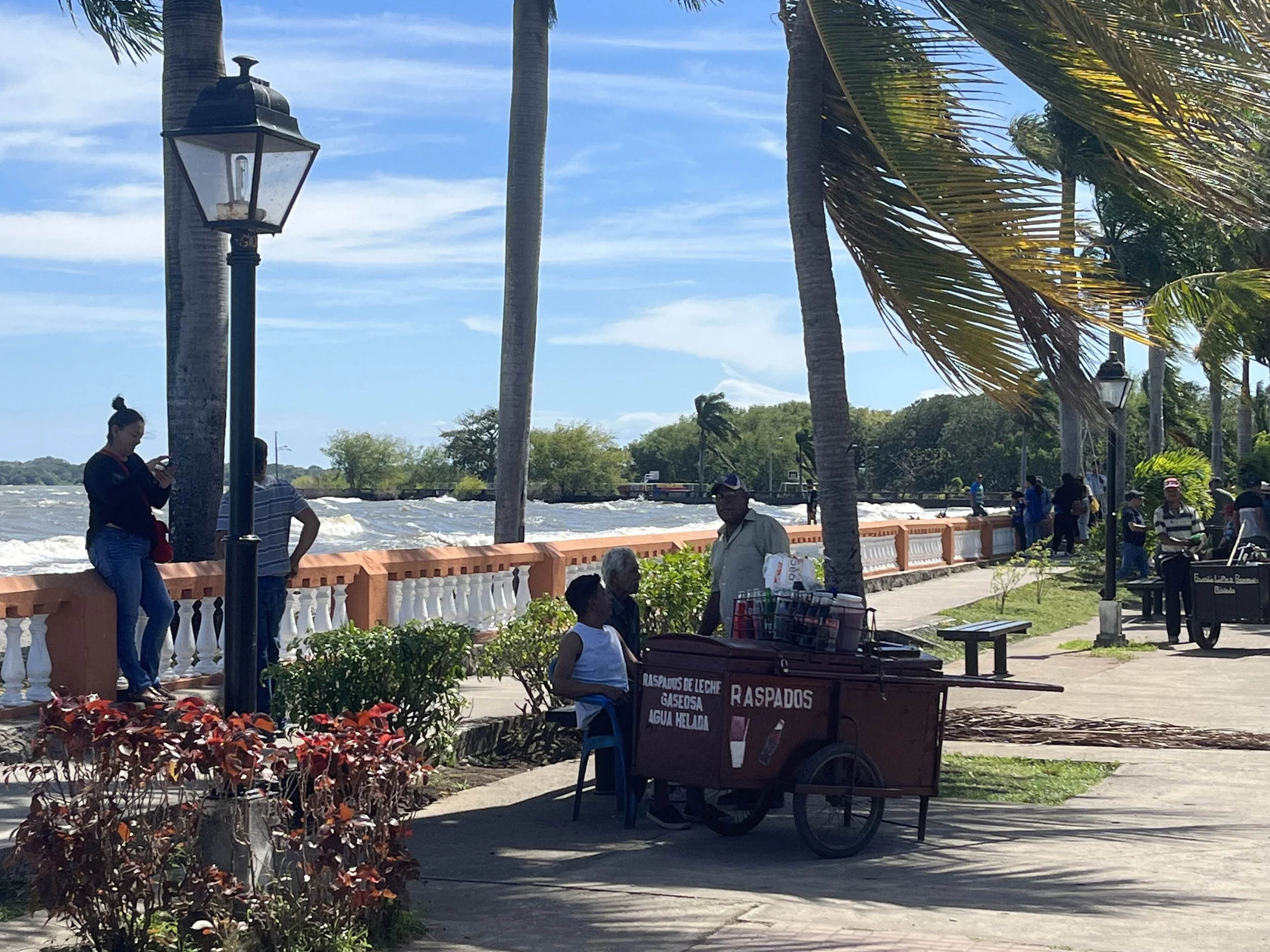
The Malecón de Granada, along Lake Nicaragua — wind, palms, bright water, and vendors selling sweet shaved-ice drinks and frescos from small carts.
Three years ago, this felt like one of those small cultural pleasures that make travel memorable: fruit, ice, plastic bags taped neatly closed, a straw, a lake breeze, a moment of local life.
Now I see even this differently.
Street food and informal vendors depend on clean water, reliable refrigeration, steady foot traffic, and a functioning local economy. When those systems weaken, what once felt like a harmless delight becomes part of a larger risk calculation — especially solo travelers over 60 who cannot afford a serious foodborne illness far from dependable care.
The scene is still charming.
The margin for error is thinner. Photos by Step Bold | stepbold.co | @lateinlifecareers
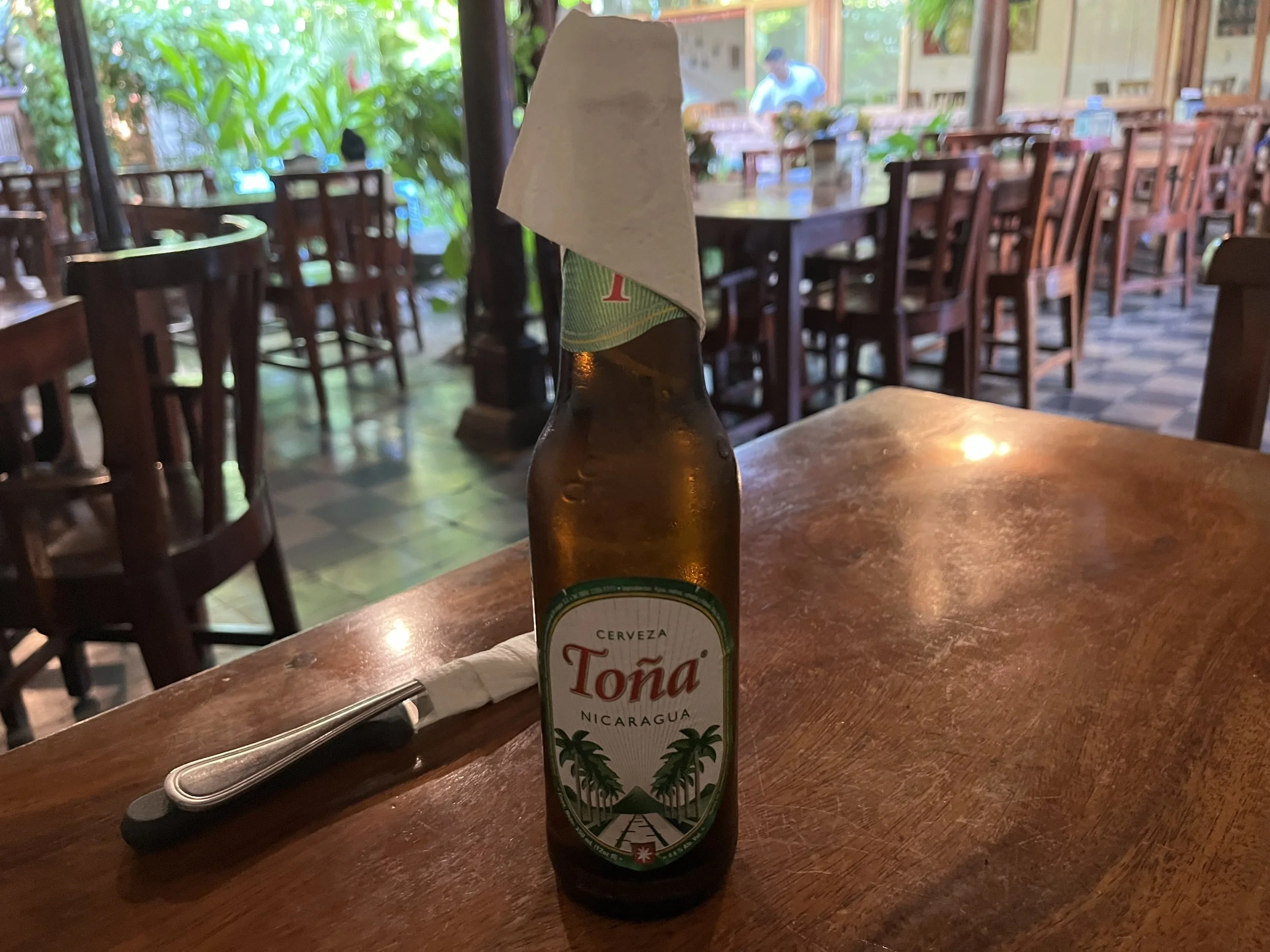
A cold Toña in breezy Café de Arte, Granada courtyard.
An illusion served cold. A crisp Toña beer sits in the breezy, green courtyard. Three years ago, this table was a gateway to community—a place to share fresh food and drift into easy, open conversations with friendly American expats. Today, those empty chairs tell the real story. The regime's aggressive campaign of property seizures, residency revocations, and targeted intimidation has driven the expat community into a mass exodus. Those who remain can no longer afford to be friendly; talking freely with a foreigner is a legal liability in a city crawling with state informants. The colonial backdrop is as beautiful as ever, but the community that gave it life has been systematically hollowed out. Photos by Step Bold | stepbold.co | @lateinlifecareers
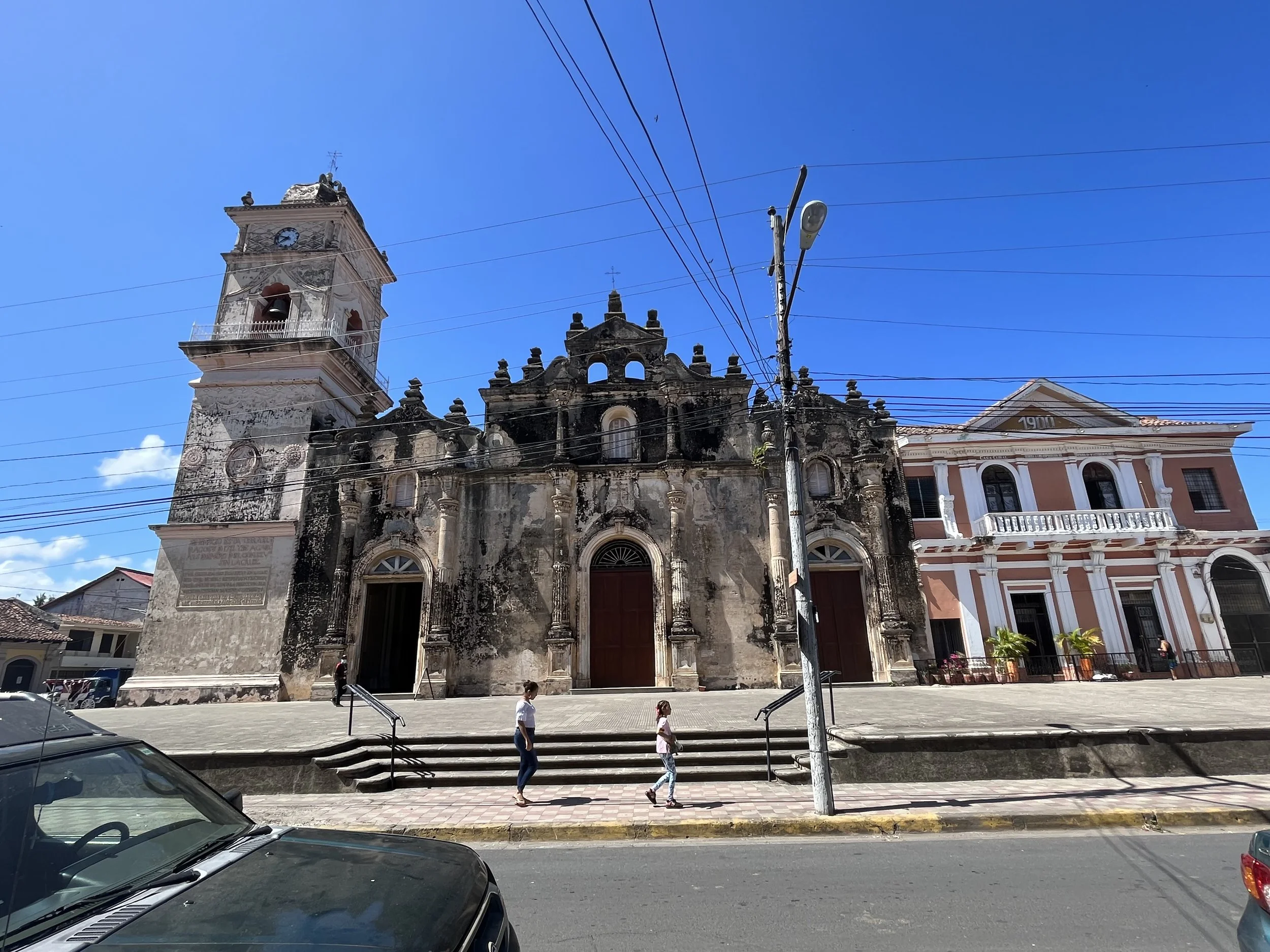
Iglesia de la Merced, Granada, Nicaragua
Iglesia de la Merced has endured centuries of violence, fire, looting, and rebuilding.
Like much of colonial Granada, it carries the marks of invasion and recovery — from pirate raids to William Walker’s destructive campaign. Its weathered facade is not a flaw. It is a record of survival.
Three years ago, climbing church towers and wandering these sacred spaces felt like a simple traveler’s privilege: history, height, architecture, view.
Today, I would approach that differently.
Nicaragua’s churches now sit inside a much heavier political reality. The beauty remains, but the context around religious spaces has changed.
Resilience still stands here.
So does caution. Photos by Step Bold | stepbold.co | @lateinlifecareers
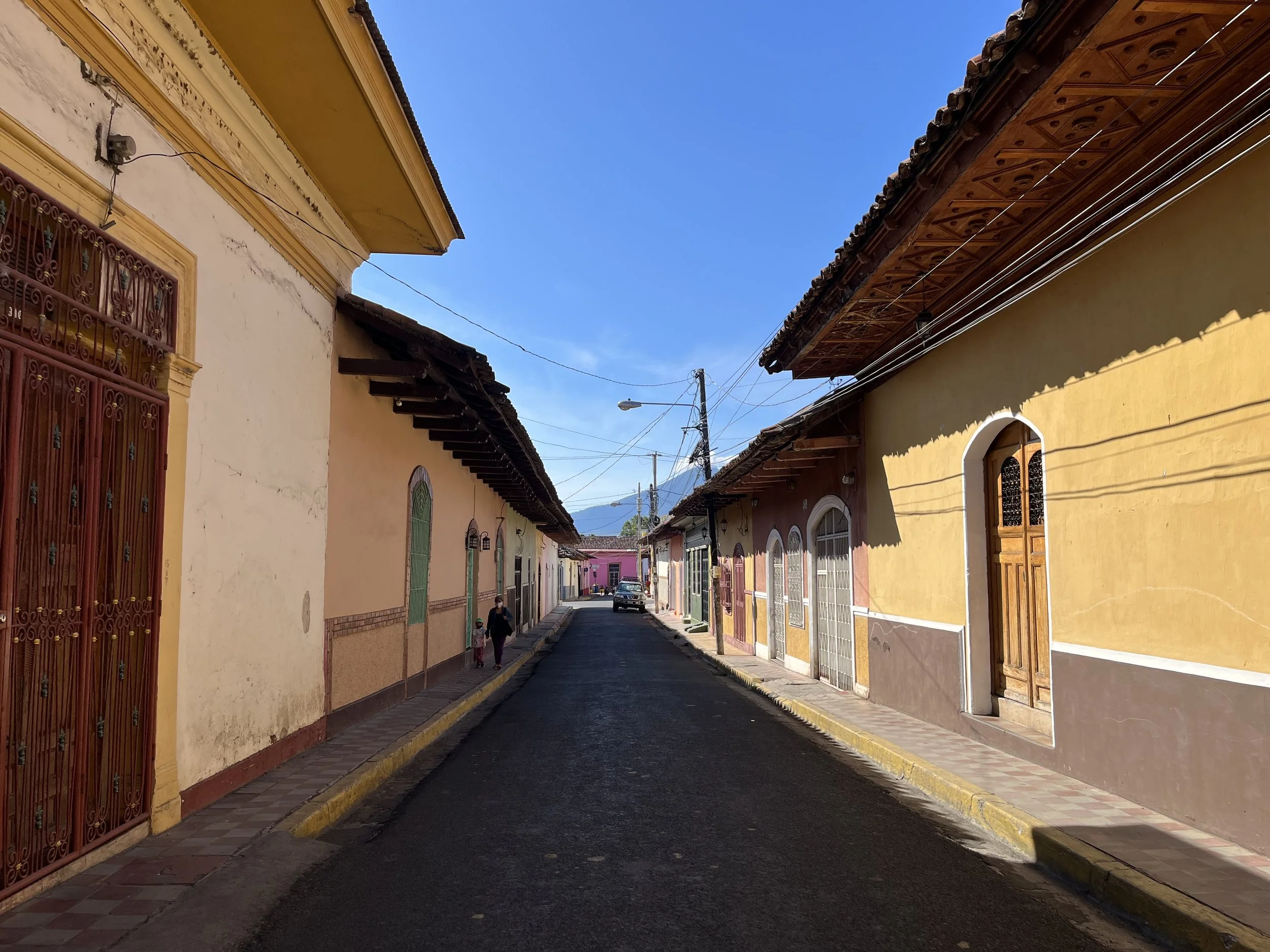
Street shot of homes, doors, and Mombacho Volcano
Granada’s deceptive tranquility.
A narrow lane, painted walls, carved doors, deep rooflines, and Mombacho Volcano rising at the end of the street.
This is the kind of scene that made me love walking Granada alone. No itinerary. No guide. Just curiosity pulling me forward block by block.
But solo wandering depends on trust — trust that pausing, photographing, turning down a quiet street, or lingering over a facade will be read as curiosity, not suspicion.
In today’s Nicaragua, that confidence is gone for me.
The street is still beautiful.
I would not move through it the same way now. Photos by Step Bold | stepbold.co | @lateinlifecareers