
Corcovado National Park: A Solo Wildlife Adventure at the Edge of the World
The crown jewel of Costa Rica's Osa Peninsula, Corcovado National Park claims nearly half the peninsula and safeguards the largest contiguous tract of lowland rainforest left in Central America. For so many of us, it represents one of the last true roadless, off-grid frontiers — a place where the wild still holds dominion on the edge of the human world.
The journey to this remote sanctuary often begins the same way: lifting off from Juan Santamaría Airport in a small single-engine turboprop. The cabin vibrates with noise, the seats feel snug, and the plane rides the thermals — jumping and dipping over endless green canopies, sharp ridges, and mist-filled valleys. We share knowing glances with singletons and couples on board, each of us carrying our own reasons for saying yes to this faraway place.
Stepping from an open Pacific boat onto Corcovado's untamed beach is a shared thrill — waves rocking the small boat, slipping on wet rocks, the immediate embrace of humidity and green. We cross into one of the planet's most biologically intense zones, a predator-rich world where every footfall reminds us we are guests in a space ruled by nature's most powerful and elusive beings.
Into the Wild
In a world that grows ever more crowded, apex predators need vast, undisturbed territories to thrive. Corcovado remains one of Central America's last strongholds for jaguars and pumas — testimony that balance is still possible. We move quietly along the trails, knowing that these elusive felines are masters of avoidance, sensing us long before we sense them. Sightings are once-in-a-lifetime gifts, and that rarity deepens our respect.
In this heightened state — every rustle, scent, and shadow amplified — we become acutely conscious. The intense humidity coats us in a slick layer of sweat, the jungle's acoustics wrap around us, and there's a serene thrill in knowing we too are being observed. We are small here, yet vibrantly alive.
What the Forest Shows You
The visual feast is laid before all of us who walk these paths. Towering trunks rise to a canopy that filters sunlight into shifting mosaics of gold and shadow. Trails glow in deep emerald and glossy olive. Iridescent blue morpho butterflies flash like living jewels. Scarlet macaws streak overhead in bursts of primary color. Troops of monkeys swing through the canopy roof, their chatter a constant soundtrack to our steps.
Rivers slice through the forest to meet wild, driftwood-strewn beaches where jungle kisses sea. Guides time our crossings with the tides as we share the small triumphs of dry feet and safe passage. Along the way, my private guide Diego knows I'm dehydrated before I do. He seats me on a log for a pull of water and helps me notice what city-tuned eyes would miss — a sub-adult crocodile, eyes and nostrils just breaking the surface, patiently waiting below a heron on a sandbar perch.
The soundscape never truly stills. It is a living orchestra: foliage rustling with hidden tapirs or monkeys, branches snapping, rivers murmuring. Tranquil bird calls give way without warning to the thunderous roars of howler monkeys that echo through our chests. Trails converge with bigger tour groups. The deliberate pace tailored just to me gives way to a brief social buzz: shared excitement as larger groups cluster around a female sloth high in a tree, momentarily crowded in an otherwise vast wilderness. The communal experience is spontaneous and welcomed. Then Diego steers me ahead of the group to bring back the stillness — longer pauses to absorb the scene, the feeling that the forest is revealing its secrets exclusively to the two of us. The immersion deepens. Silence between observations becomes comfortable and charged with anticipation. We notice more: the way light filters through leaves in golden shafts, the rustle of a band of coatis with large dark eyes staring up close with interest as they forage, and the distant call of a toucan.
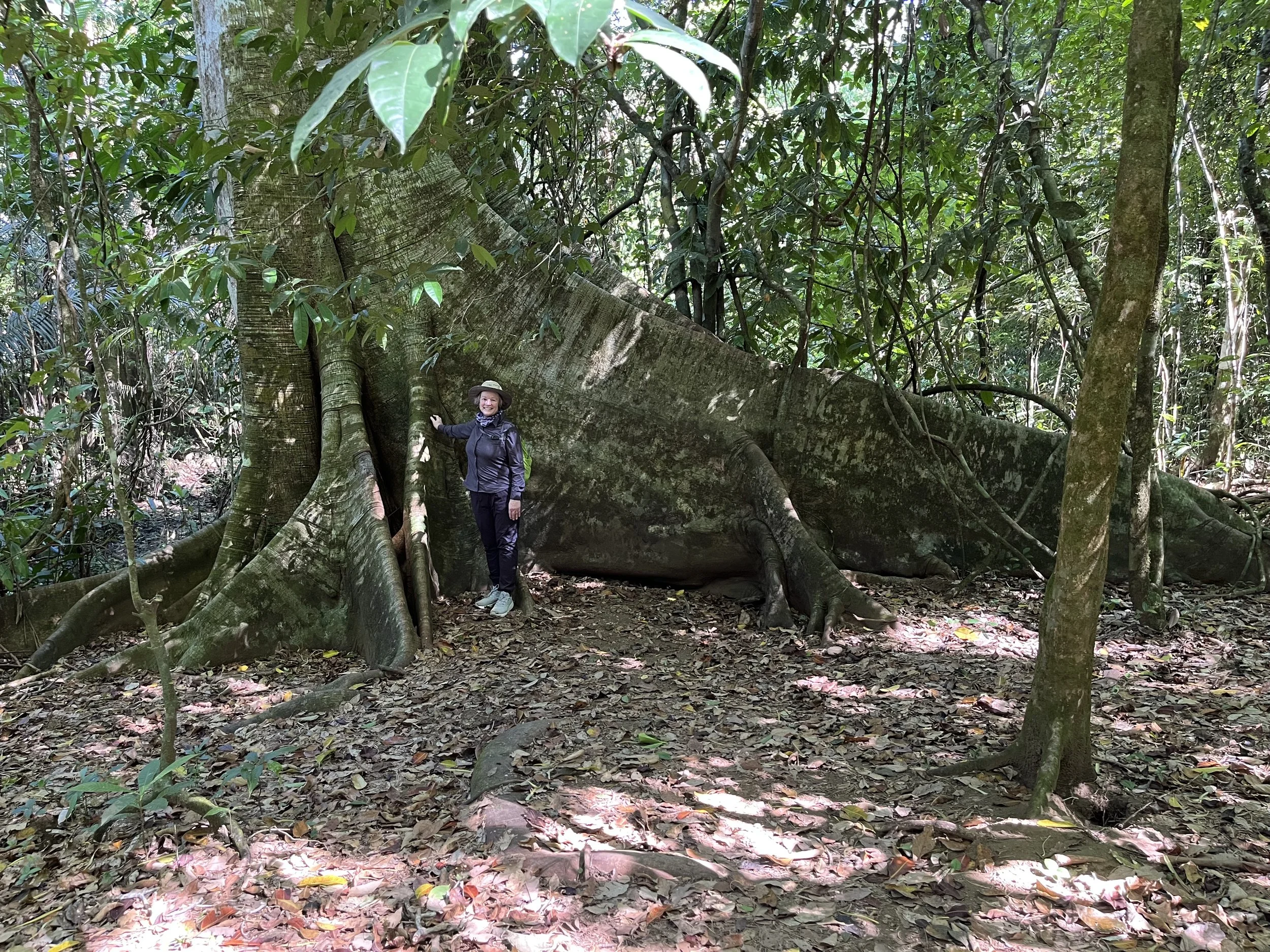
These roots were ancient before any of us were born. Corcovado makes you feel small in the best way — and completely, fully alive.
The Living Web
Jaguars and pumas may be the flagship species that draw us here, but nothing stands apart in Corcovado's intact web. We walk among more than 800 tree species, 124 mammals — all four Costa Rican monkey species, tapirs, peccaries, anteaters — 480 birds, and uncountable insects, amphibians, and reptiles. The thriving big cats prove that this forest still breathes freely: minimal human footprint, whole food chains, plentiful prey.
Conservation made this transformation possible. Before 1975, the Osa was a rough frontier scarred by mining, logging, and poaching. Today, access is tightly managed: mandatory guides, strict visitor limits, vast interior zones reserved for science or closed entirely. No touching, no feeding — rules we embrace because now we know what's at stake.
Our guides carry telephoto lenses on tripods, capturing intimate portraits without intrusion: the sharp-eyed stare of a toucan, the drowsy face of a baby monkey cradled in dark fur and filtered light. When we see these endangered creatures in the places they eat, sleep, and raise their young, something shifts inside us. We are no longer just visitors. We become present participants in the living web — our own well-being forever tethered to the health of the whole Earth.
The Return
Corcovado's raw power is a full-body immersion we all acknowledge. The humidity presses hard. On the way back we hike to the beach, wade through knee-deep water over algae-covered stones, waves shoving us, to our waiting boat. Turquoise waves crash along the rugged shore where jungle meets ocean. Dolphins arc, sea turtles glide, seabirds wheel overhead — as if the place itself is sending us off with a gentle farewell.
We carry home that distinct nature high: vivid greens saturating every sense, the chorus of bird calls and insect hum, salt air mingling with jungle freshness. Fatigue waits politely while awe and wonder take center stage. Words fail us, but our hearts speak clearly: we are replenished and connected.
Come
To every woman over 60 reading this — the one hesitating over flight tabs, wondering if the jungle is too far, too wild, too much for me — know this:
We see you.
We were you.
We've stood on that same wild beach, felt that same quickened pulse, shared that same rush of energy and belonging.
Corcovado defies the bucket list cliché of chasing a quick photo op and moving on to the next famous spot. It delivers a far deeper encounter than a social media dopamine hit. It's a reminder that our hunger for wonder, for deep connection to something larger than ourselves — it never retires. It simply waits for us to say yes.
So come.
Have you been to Corcovado — or does it still pull at you? Drop a comment below. And if this post pushed you one step closer, pass it along to the woman in your circle who's still hesitating over those flight tabs.
“Pack light. Step bold. Feel deeply.”We're out here. Silver in our hair and salt on our skin, strong-hearted, wide-eyed — holding a place for you in the wild chorus of the jungle.
We're not done dreaming. We're just getting started. 🌿
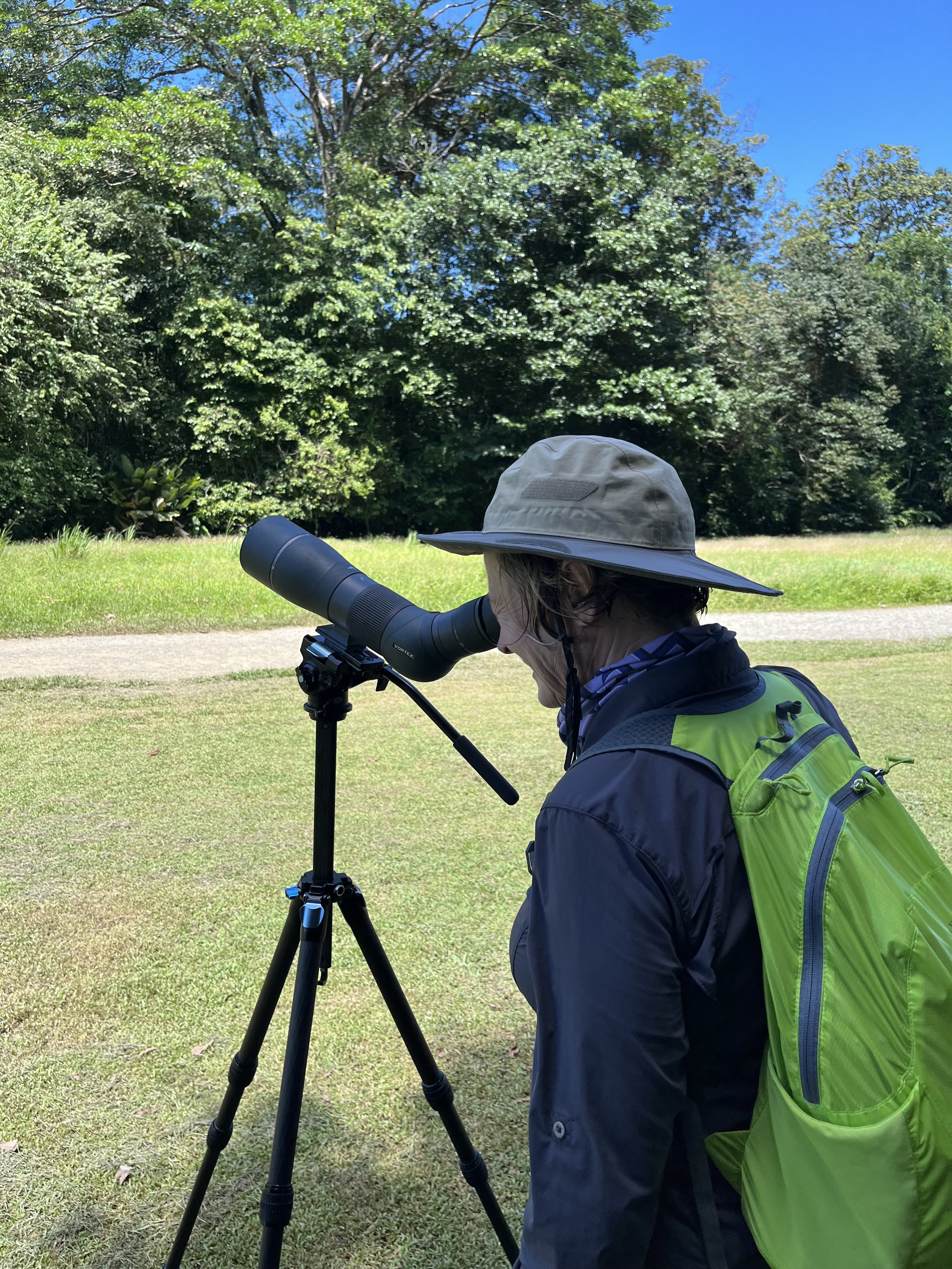
Eye to the lens, heart wide open. Standing deep in Corcovado National Park, utterly absorbed in the hidden world of scarlet macaws and toucans. No rush, no crowds — just me, the humid jungle air, and the simple joy of watching wild things go about their day.
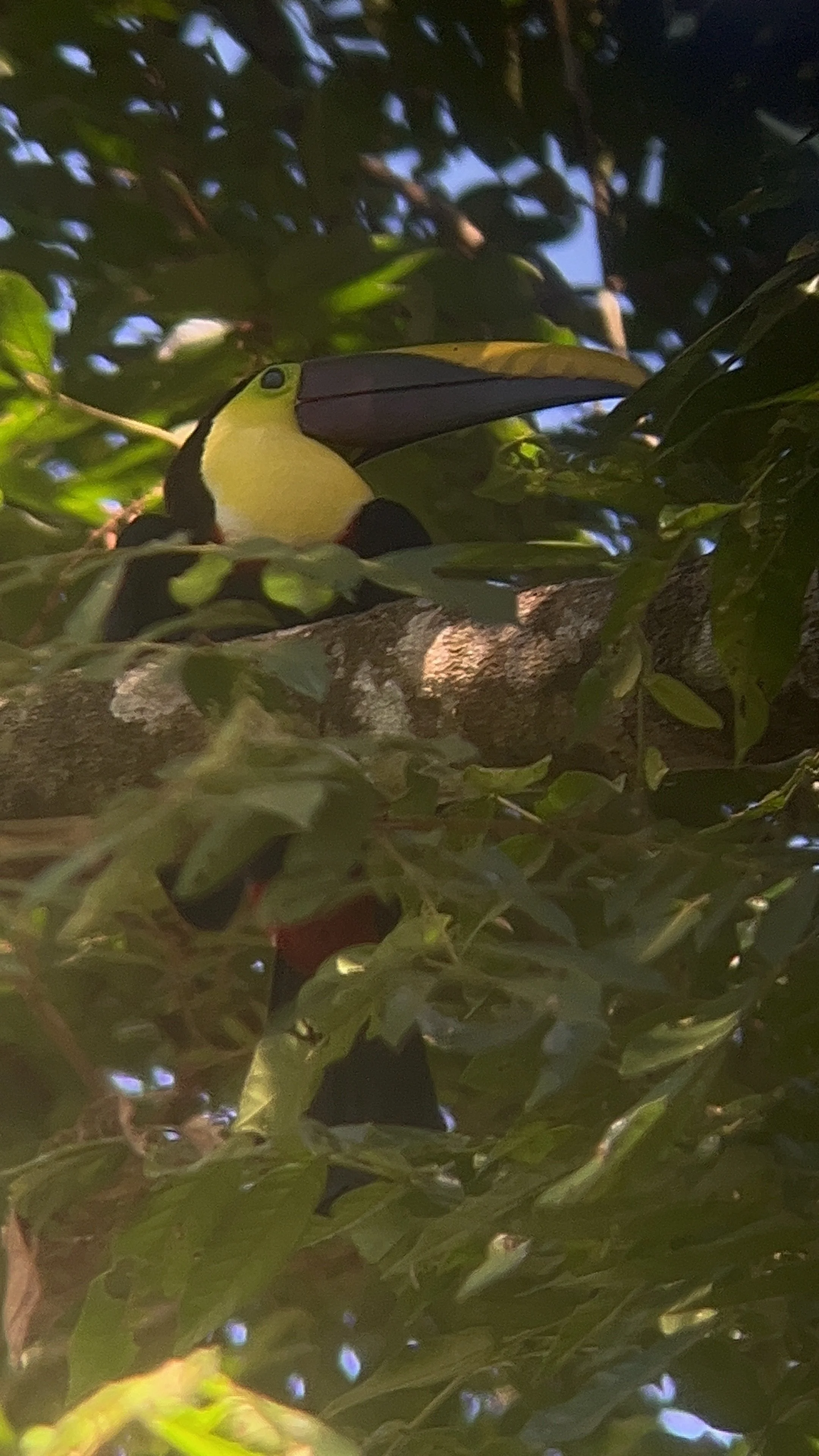
The telephoto lens collapsed the distance without disturbing the bird, bestowing a rare “private audience”. We didn’t just spot a bird — we were with it. That combination of technological mediation and genuine wilderness creates a strange, spiritual closeness: the bird remains wild and free, yet you get to study its feathers, its subtle movements, and its personality in stunning detail.
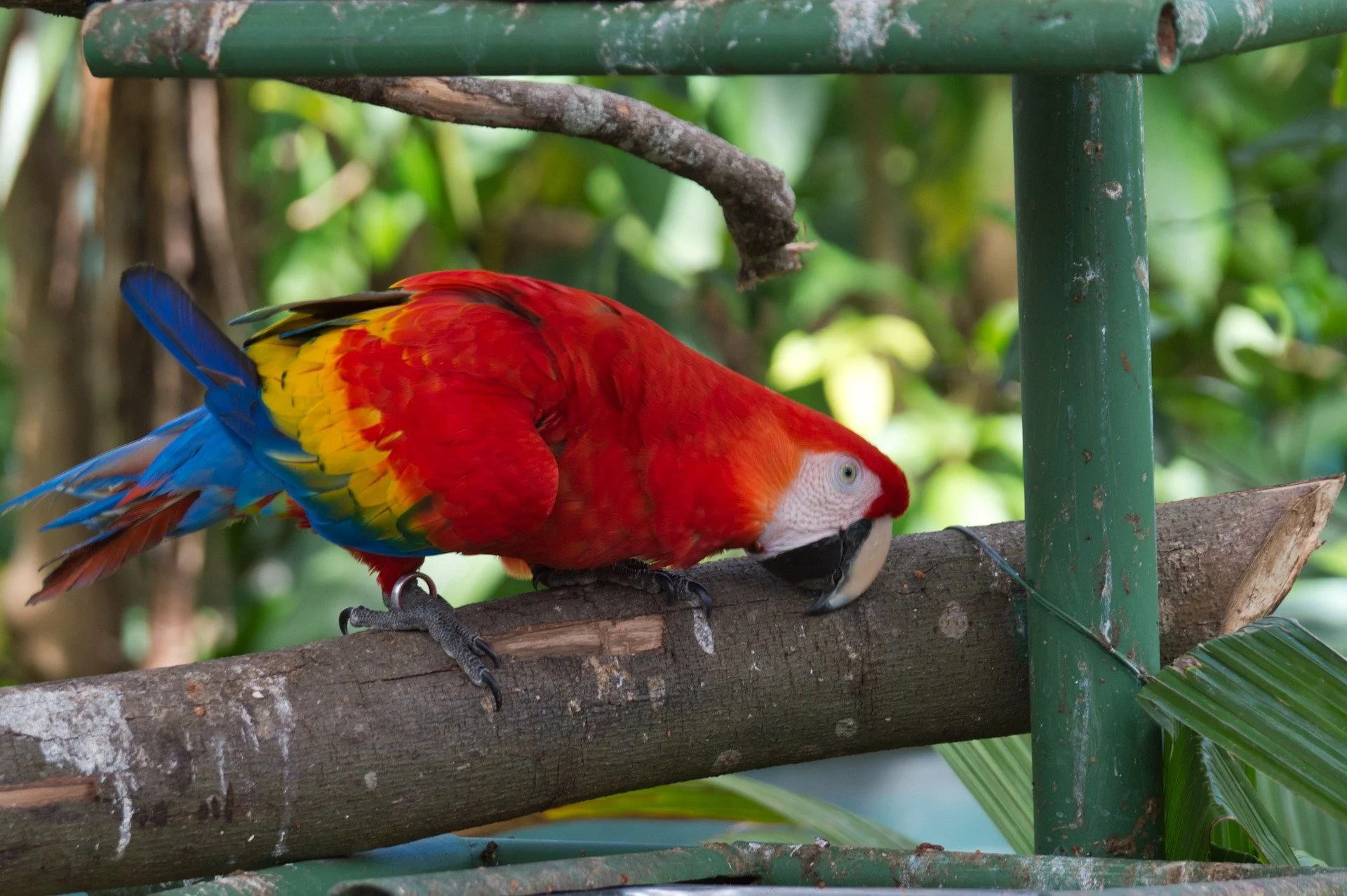
Scarlet macaws streak overhead in bursts of primary color.
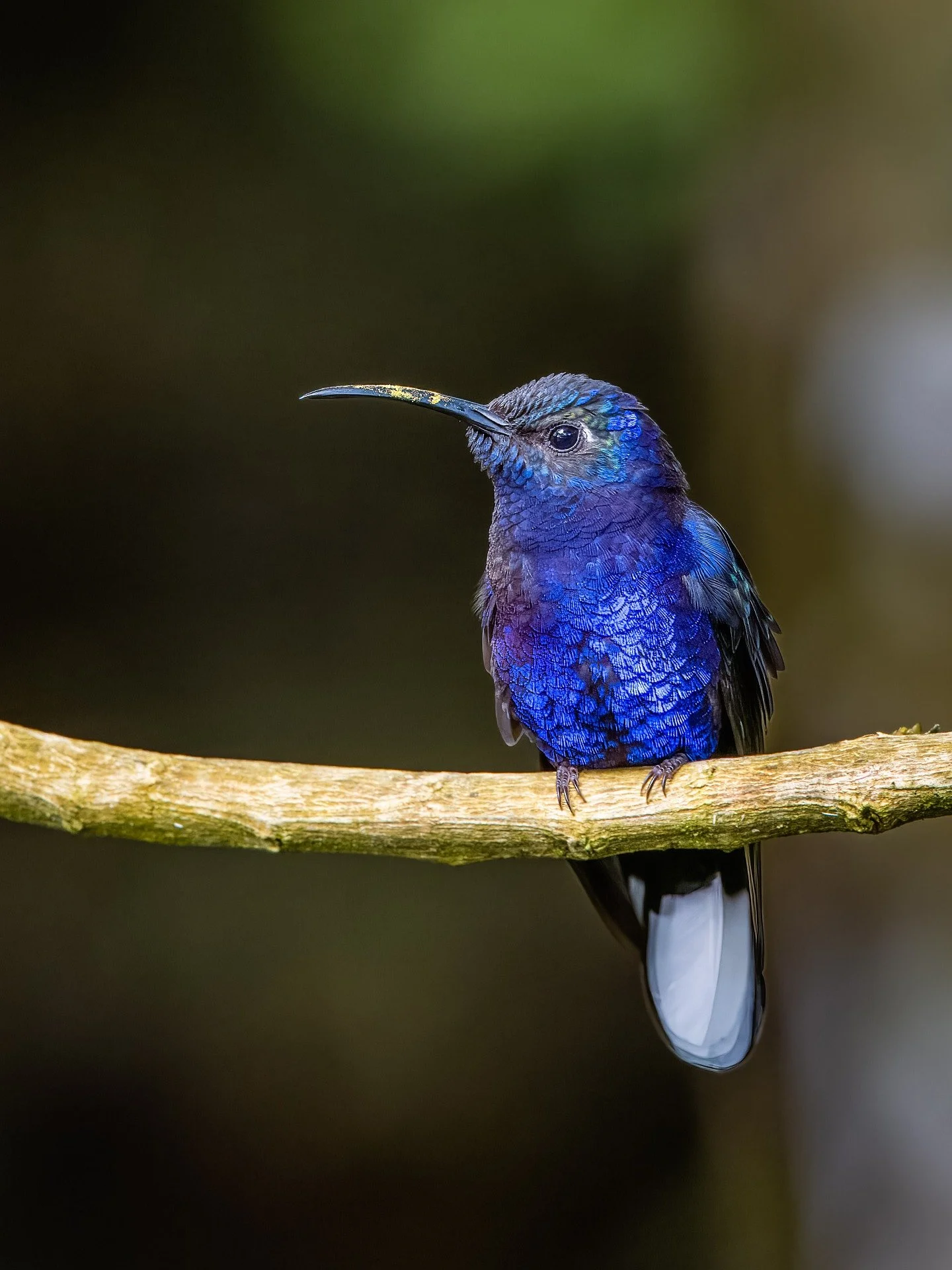
We walk among more than 800 tree species, 124 mammals — all four Costa Rican monkey species, tapirs, peccaries, anteaters — 480 birds, and uncountable insects, amphibians, and reptiles.
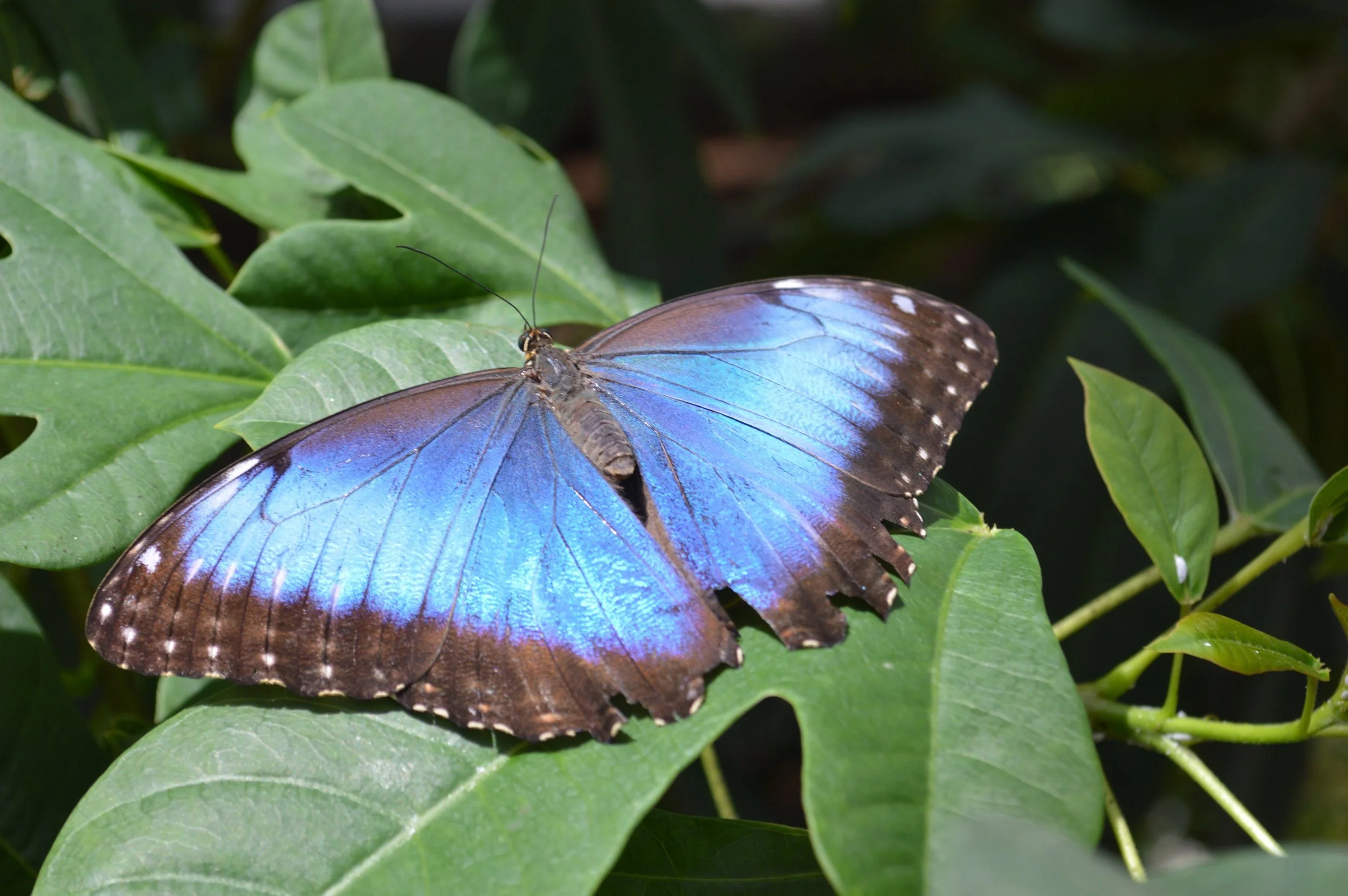
Iridescent blue morpho butterflies flash like living jewels.