
León, Nicaragua: A Solo Traveler’s Guide to Its Colonial Heritage and Poetic Soul
He has been weeping since 1916.
León’s marble lion keeps eternal watch over Nicaragua’s beloved poet Rubén Darío — and over every solitary soul who comes to stand quietly in his light.
This is why Nicaragua is so hard to give up.
Not because the warnings aren’t serious. They are. Not because politics can be separated from travel. It can’t, not cleanly. But because the country is layered with beauty, poetry, generosity, and moments that stay with you.
I’m beginning a short series on that tension: what it means to love a place I am not currently recommending you visit.
Arriving in León
⚠️ I no longer travel to Nicaragua. This post describes a trip taken in 2023. On July 19, 2026, Daniel Ortega announced that Nicaragua will hold no further elections. My position moved from "know the risk" to "don't go." Where I stand now, and why → https://www.stepbold.co/nicaragua-travel-status Last reviewed: July 30, 2026I check my location—Coco Calala is close. A negotiated fare later, I step off the scorched street into the hushed, vaulted foyer of a colonial mansion. Black-and-white tile stretches ahead, leading to a space that opens onto a lush tropical garden. I exhale slowly. I'm here.
A University Town, a Poet's City
Founded in 1524, León is one of the oldest colonial cities in the Americas — a university town and a long-standing center of art, revolution, and poetry.
With my backpack finally off my shoulders, I wander into the central garden as the evening air softens and León begins to open around me. That first night, settling in as a guest at Coco Calala, I find its renowned plant-based restaurant humming with locals.
In the heart of dusty, vibrant León, organic plates woven from local ingredients arrive so satisfying that I briefly wonder if I’ll muster the resolve to wander onward.
Onward I’ll go.
That has always been the point.
Mornings at Pan y Paz
My mornings in León settle into a rhythm that would have tempted a younger me to move here. Out Coco Calala’s front door into the tropical air, around the corner to Pan y Paz—a French bakery whose name translates, perfectly, to Bread and Peace. Inside, the sanctuary is breezy, flour-dusted, and heavy with the aroma of dark, volcanic Nicaraguan coffee.
You are greeted by the architectural precision of European displays reimagined with a tropical pulse. Behind the glass, flaky croissants and pain au chocolat sit in vibrant contrast to pools of tart passionfruit curd and the deep violet of local preserves. The cases groan under the weight of this fusion: buttery French tradition meeting the zesty intensity of the tropics, all anchored by the earthiness of a bold roast steaming in a porcelain demitasse.
Beyond the rows of crusty baguettes, the owners have carefully maintained the original colonial architecture and transformed the space into a lush, garden-like sanctuary where the city’s heat and noise gently fade away. The scent of yeast and obsidian beans gives way to the damp, floral coolness of a colonial courtyard. This open-air sanctuary acts as a natural air conditioner, drawing you into a world where the city bustle dissolves into the shade.
Yes, please.
León Cathedral: A Daily Compass
Two blocks along crumbling facades and searing brick streets, and the century changes.
Immense, gleaming white, its broad facade stretching wide beneath twin bell towers, León Cathedral is the largest cathedral in Central America.
Nothing prepares you.
I stand still and let it land.
I think of the townspeople of the late 1700s stepping into this same light after decades of scaffolding, labor, and hardship. The weight of it never lightens. The awe remains as sharp as the first encounter.
Half a century in the making, León Cathedral becomes my daily compass.
A UNESCO World Heritage Site, it holds natural light and cool air in equal measure. I return each day, drawn back to the tomb of Rubén Darío, Nicaragua’s beloved poet.
Beneath a towering statue of St. Paul, keeping eternal watch, is a lion’s face frozen in grief — raw, dignified, humbled by love.
He has been weeping since 1916.
The Weight of a Weeping Lion
I find something deeply personal in the marble lion's silent vigil. The quiet ache of choosing autonomy. The fierce contentment of having lived on your own terms. León understands both.
A City Where Poetry Still Holds
The poet José Coronel Urtecho once quipped, “Every Nicaraguan is a poet until proven otherwise.”
Spend a few days in León and you see what he meant.
After decades of revolution, corruption, and political strain, poetry may be one of the threads that still holds. Nowhere does that thread feel more taut than León.
I trail Darío’s spirit to the house where he spent his final days. Terra-cotta-roofed corridors open onto a courtyard of groomed hedges — a tranquil, suspended world.
His handwritten manuscripts rest alongside the fine clothing he wore as an ambassador. A modest wrought iron bed. A Bible.
Darío died from complications of alcoholism, his final days painful and hauntingly dignified. Standing in that still courtyard, it is his poetry that fills the air.
A final, luminous presence.
The Daily Reset
León’s colonial grid radiates outward from Parque Central, and over the days that follow, I explore it until the hounding heat sends me retreating.
I return to Coco Calala’s courtyard pool — a turquoise sliver of water sliced into the deep green of the garden.
It is more than an amenity.
It is my haven, my reward, and my daily reset from the scorched city beyond the walls.
So What Do We Do?
That is the question I keep circling.
A place that came into our lives and offered beauty, ease, affordability, poetry, and human warmth — when the larger conditions around that place become impossible to ignore?
For solo women travelers especially, planning is not just about where we want to go.
It is an ongoing assessment of risk, values, timing, infrastructure, politics, and personal judgment. The map changes. Conditions shift. A place we once recommended freely may become a place we hold more carefully.
That does not erase what will stay in our hearts.
But it does change what we responsibly say next.
I now treat Nicaragua as a destination I am grateful to have experienced, but one I am not currently recommending.
If you’re fit, stubbornly curious, and still wondering if a bold adventure is yours to claim — it is. Without question, it is.
There’s a whole community of us out here: undeterred, self-directed, and still crafting the richest chapters of our lives.
But bold travel does not always mean going anyway.
Sometimes it means pausing.
Often it means redirecting.
And sometimes it means loving a place enough to tell the truth about why you are not sending others there right now.
León is extraordinary.
And hard to give up.
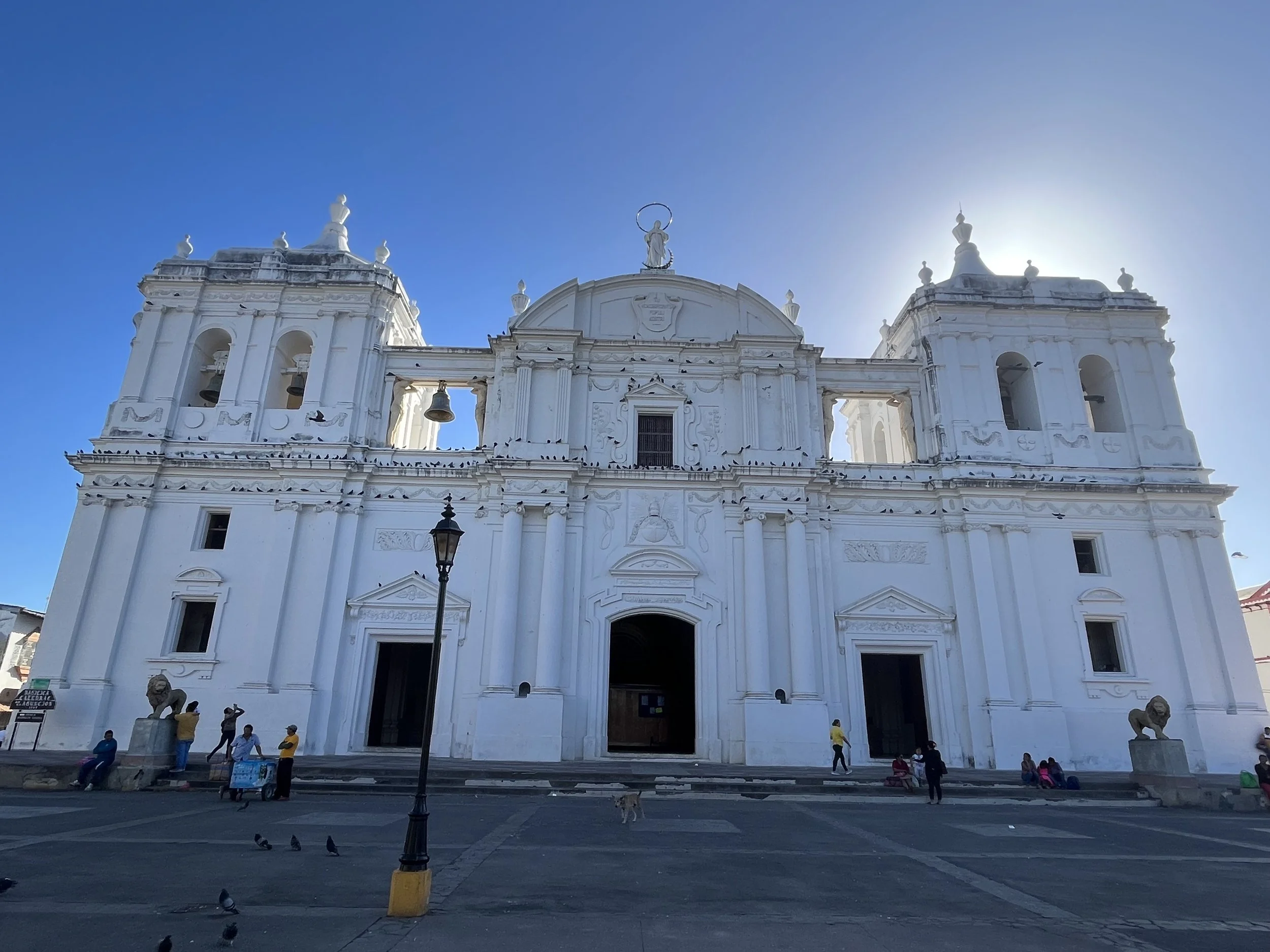
Immense, gleaming white, its broad facade stretching wide beneath twin bell towers, León Cathedral is the largest cathedral in Central America. Nothing prepares you. Photo by stepbold.co | @lateinlifecareers
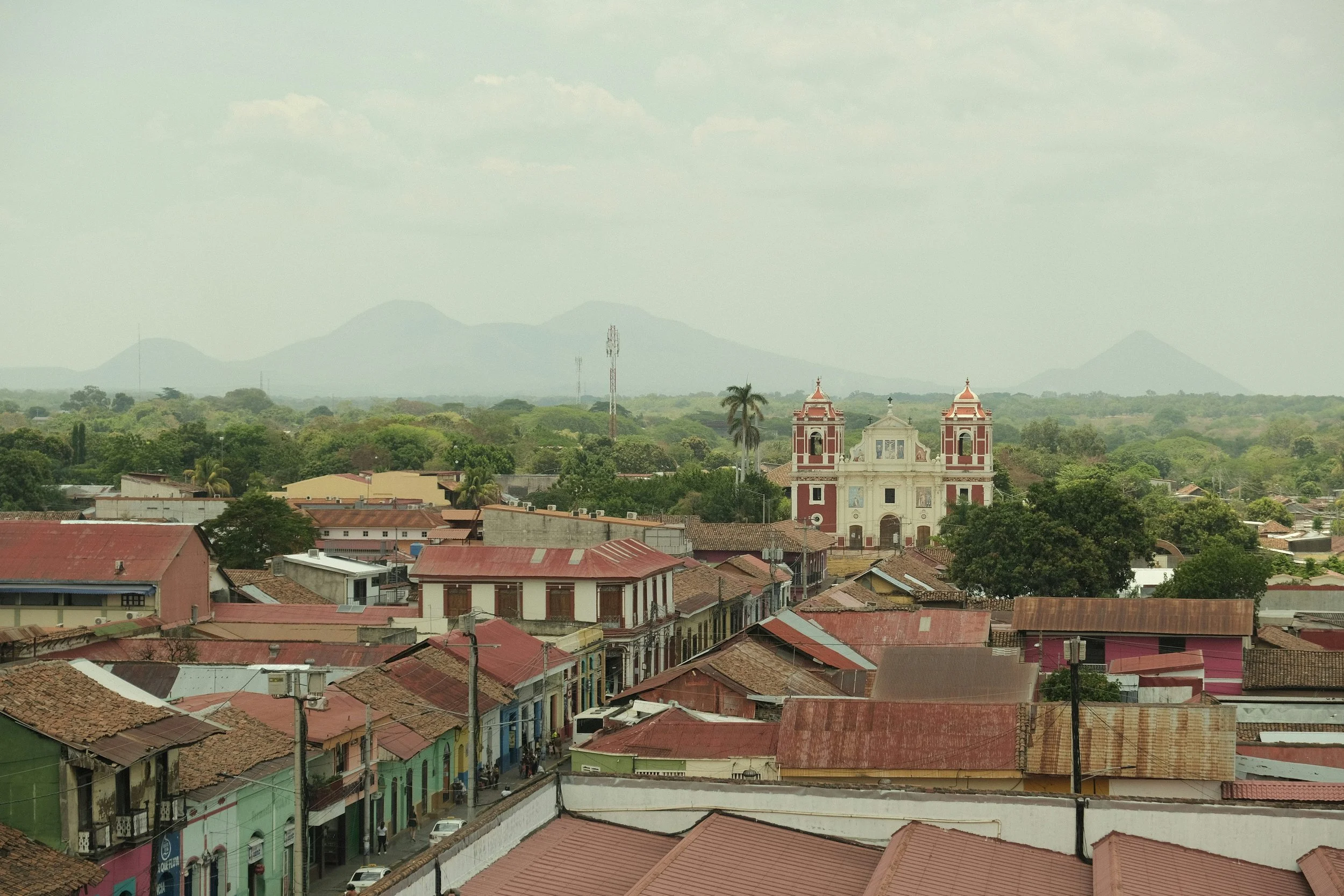
León’s essence: the orderly colonial grid of colorful rooftops giving way to the iconic red-and-white towers of Iglesia El Calvario—built around 1750. In the distance, the Maribios volcanic chain and Momotombo watch over a city that has survived earthquakes, revolution, and decades of political upheaval. A perfect layering of heritage, everyday life, and a landscape that doesn't negotiate. Photo by Austin Curtis.
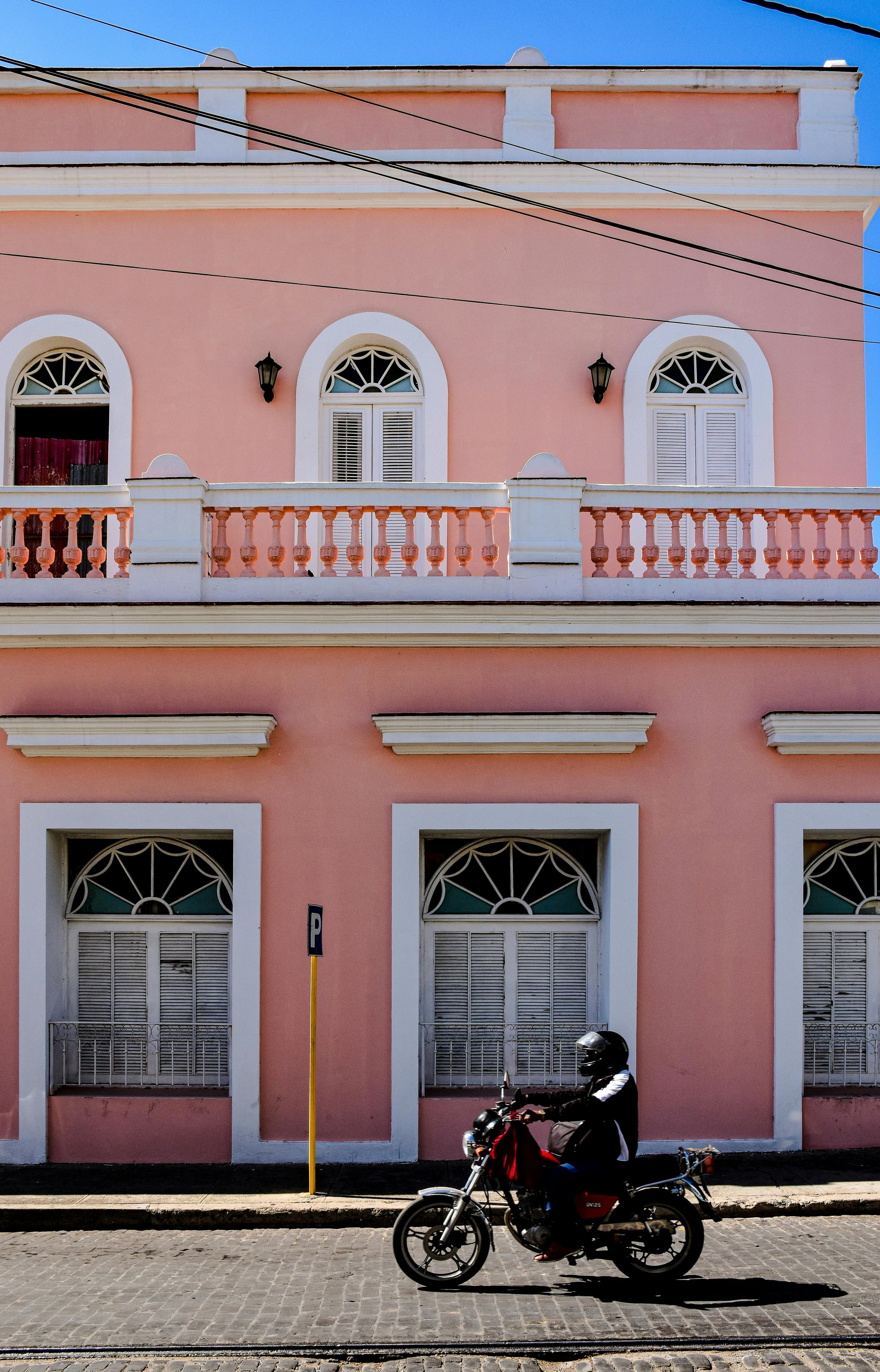
Vibrant colonial architecture in the morning light—arched windows and timeless pink walls along streets of interlocking pavers called adoquines. These stones are part of the local DNA; during the 1979 revolution, they were ripped up to build barricades against a dictatorship. Decades later, that spirit of resistance lingers as the current regime tightens its grip on this defiant heart of Nicaragua. Photo by Damien Saillet.
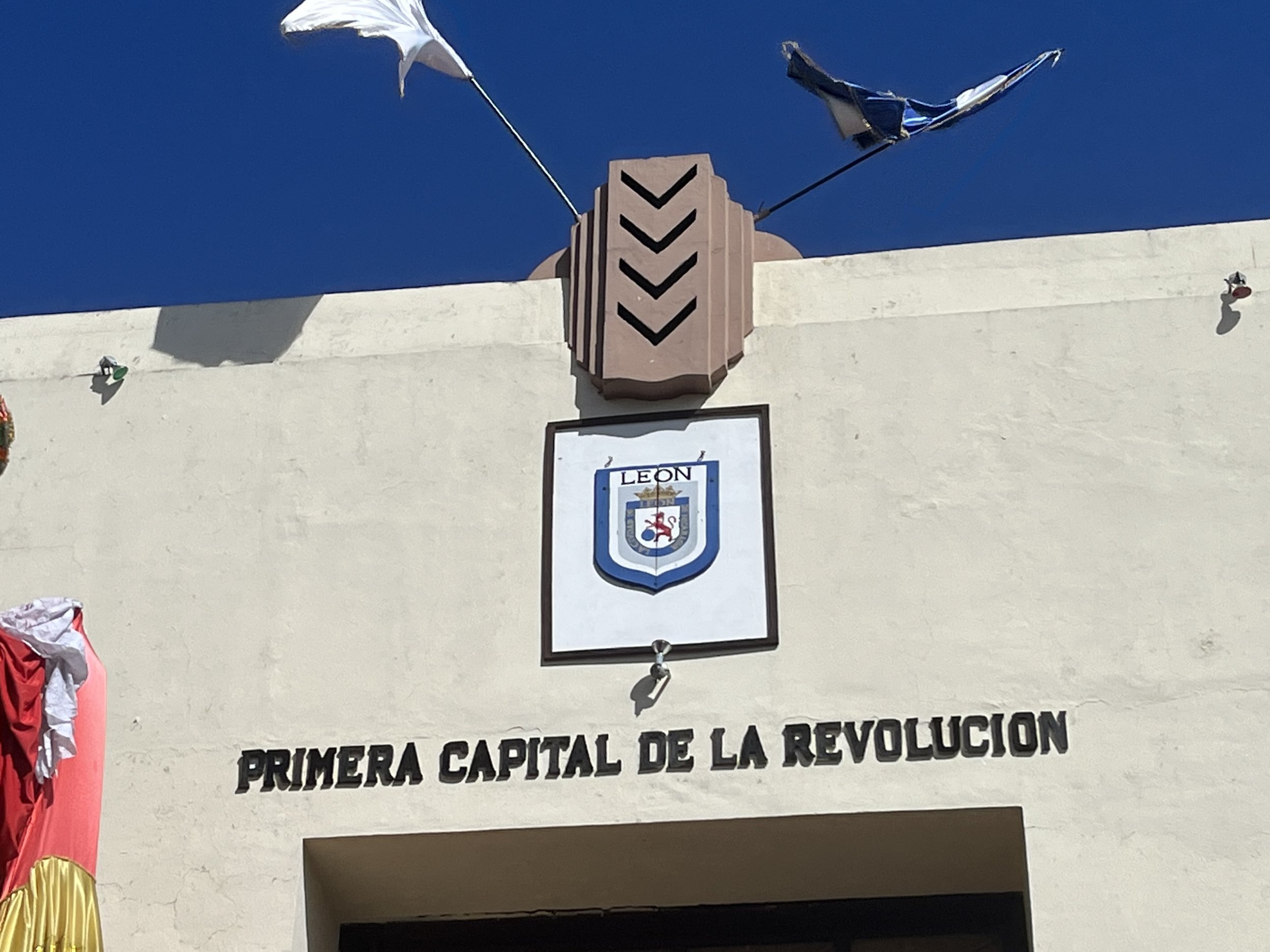
UNAN-León: An intellectual hub and a key center of Nicaraguan resistance. The sign marks León as the "first capital of the revolution"—a title that carries weight, pride, and a complicated irony in today's political climate. Photo by stepbold.co | @lateinlifecareers
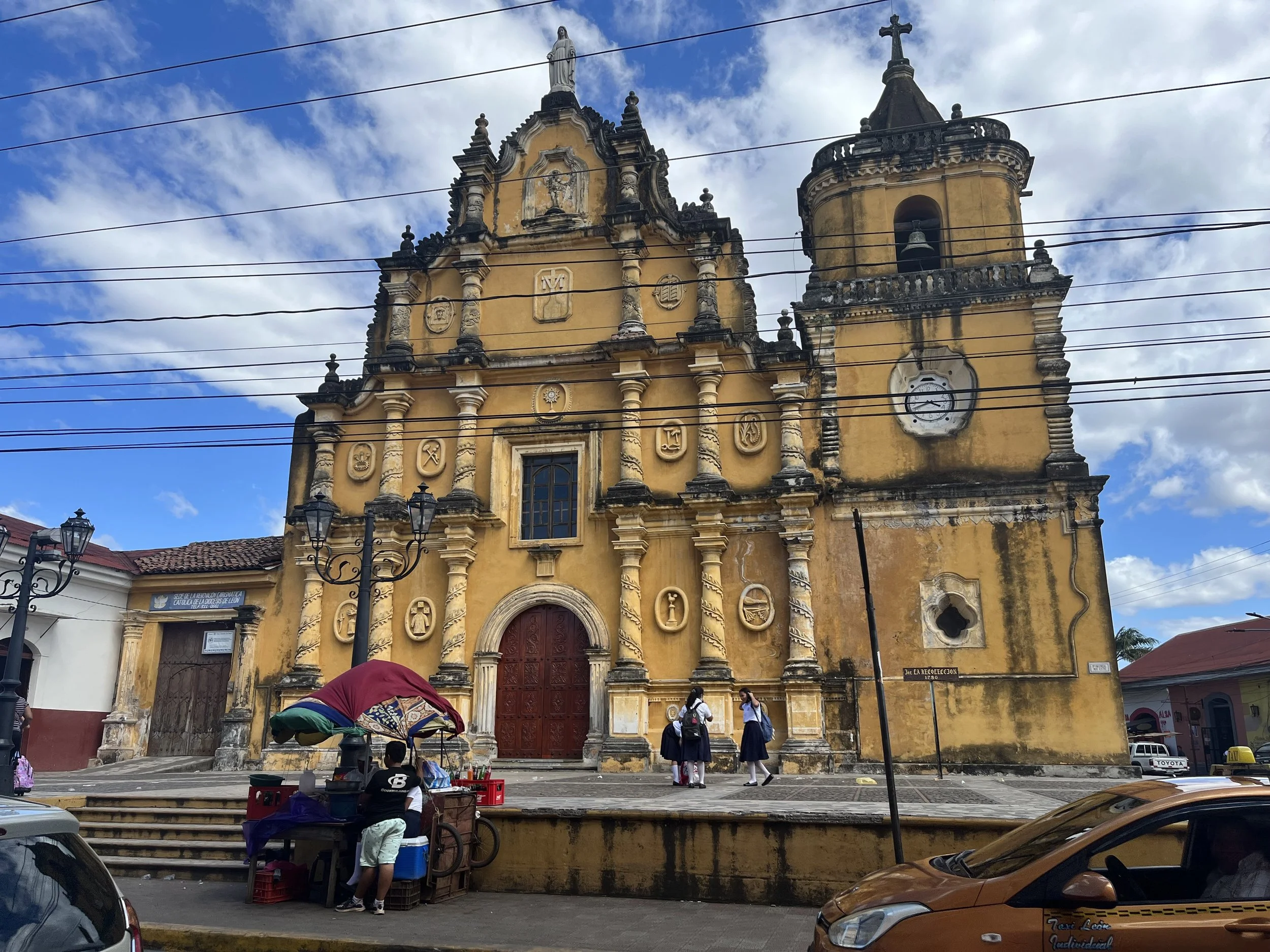
The 240-year-old golden Baroque facade of Iglesia La Recolección glowing against a blazing sky. This is the reward of traveling solo: the freedom to stop for what resonates, no tour guide or checklist required. Just you and a centuries-old facade holding its ground. Photo by stepbold.co | lateinlifecareers
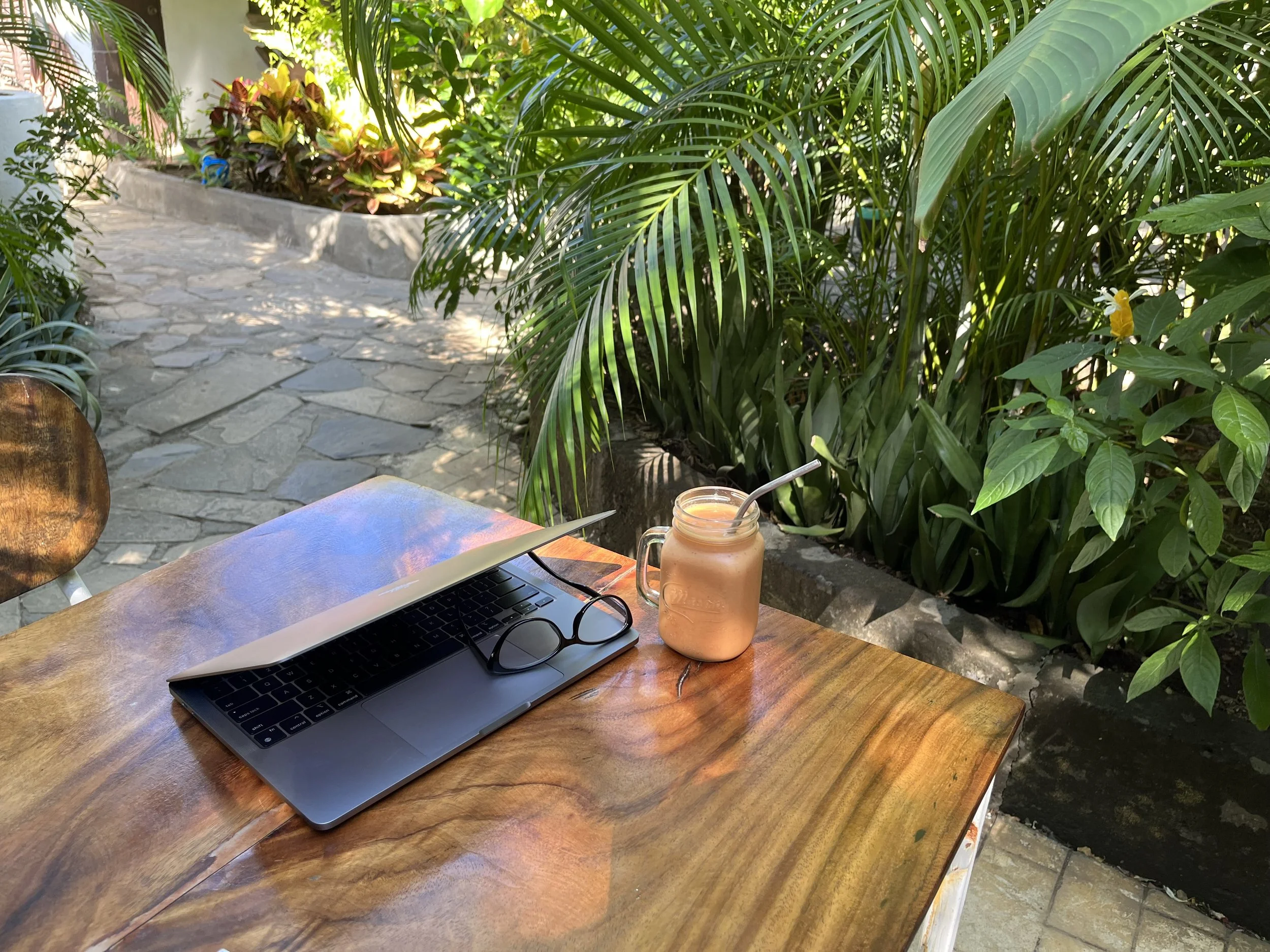
Decades deep in the tech grind, still online with a laptop and a smoothie at Coco Calala. No glamorous transformation story; rather the stubborn rhythm of a woman who has stayed in the game, curious and self-directed, making it work on her own terms. To my kindred spirits that stayed the course, did the hard work of family, and funded retirement accounts over many decades. I see you. Photo by stepbold.co | @lateinlifecareers
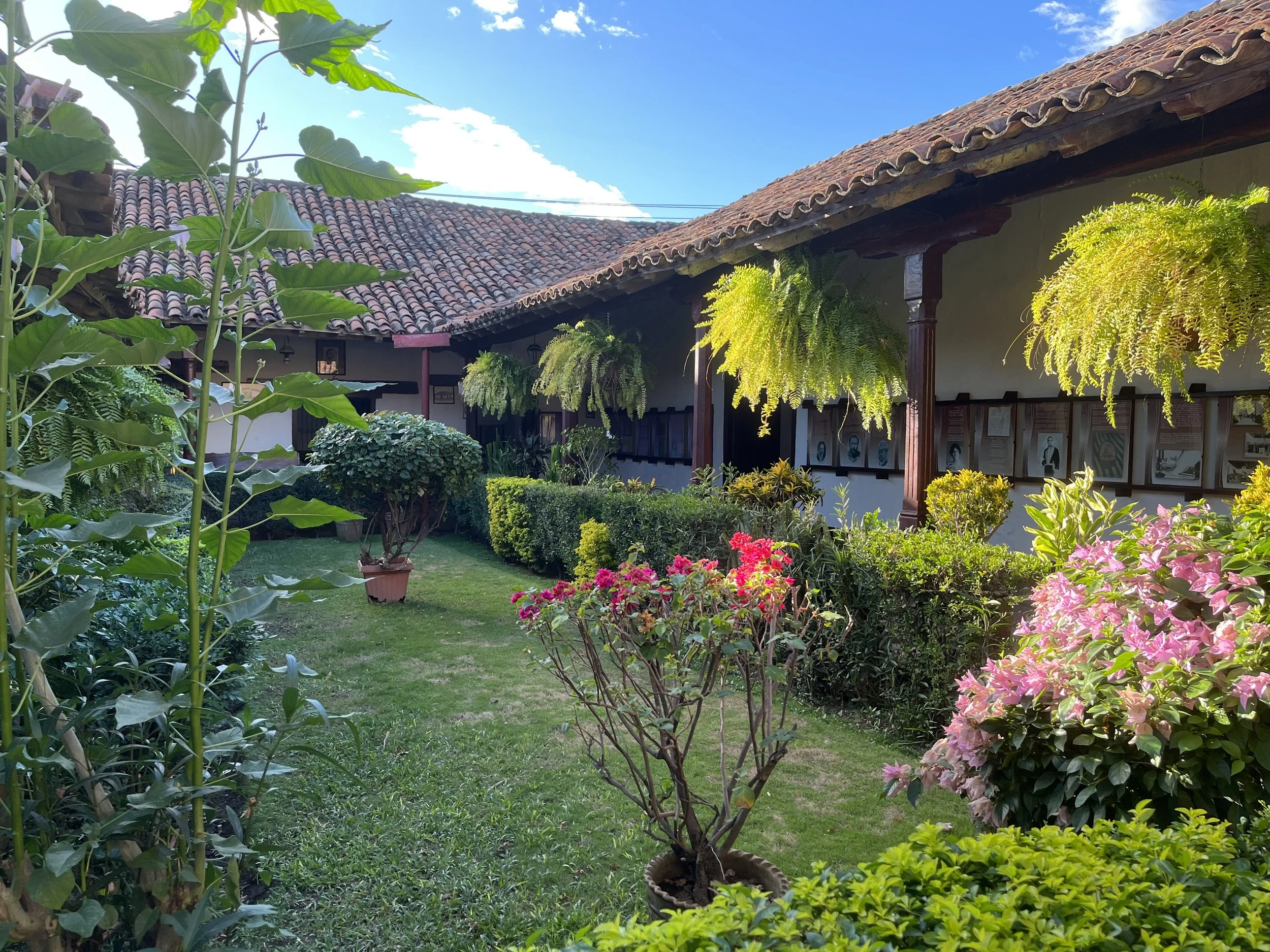
Trailing the spirit of Rubén Darío. This restful, terra-cotta-roofed courtyard is where Nicaragua’s beloved poet returned to live out his final days. In a country where politics is often a storm, poetry remains the one thread that still holds. Photo by stepbold.co | @lateinlifecareers
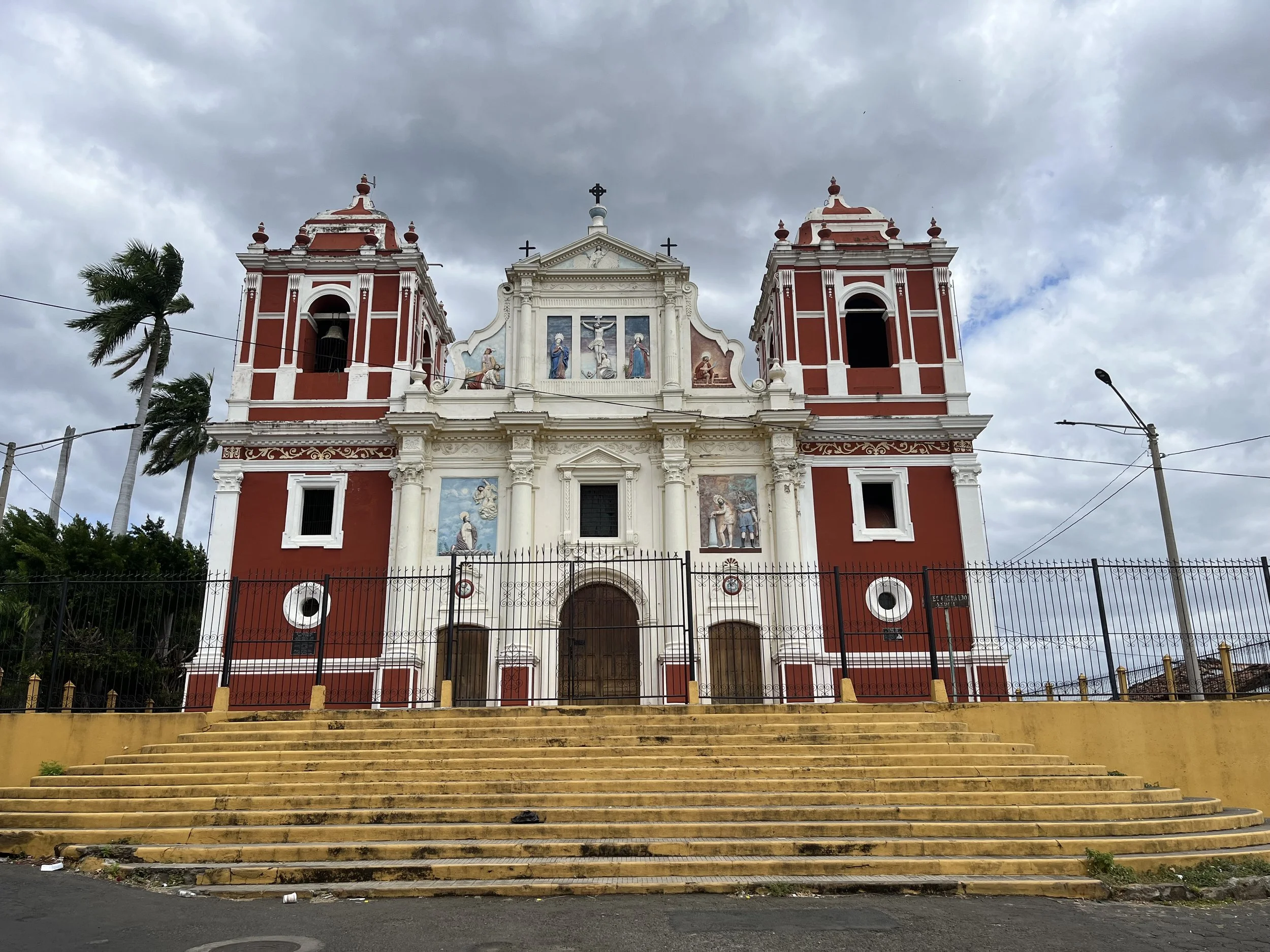
Trust what resonates. Here, it’s the bold wine-and-cream facade of Iglesia Dulce Nombre de Jesús (Calvary Church of the Sweet Name of Jesus).At the top, the crucifixion scene is depicted with raw realism. Universal themes of faith and forgiveness carved into the skyline. Photo by stepbold.co | @lateinlifecareers
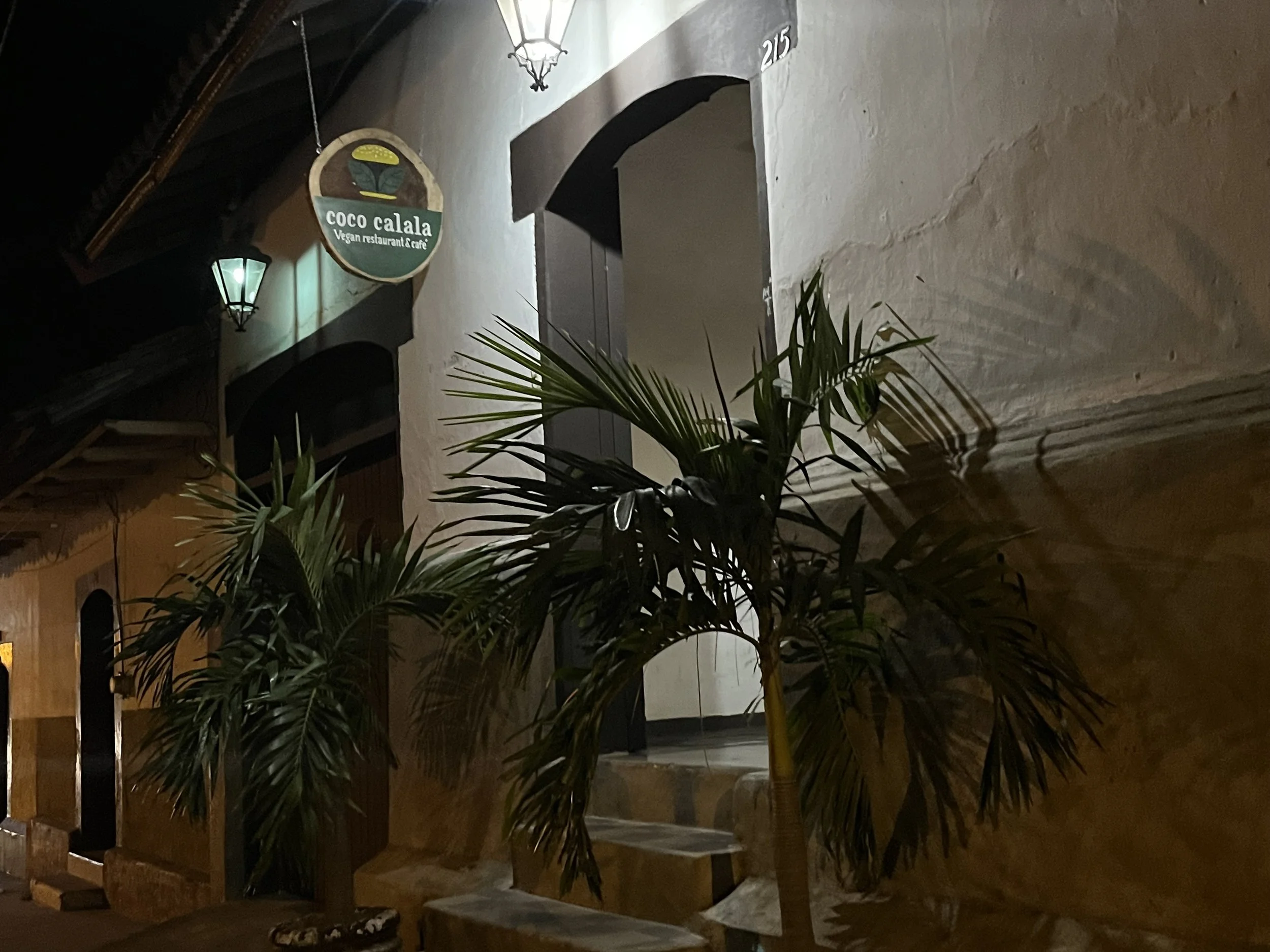
The understated colonial facade of Coco Calala. It blends seamlessly into the historic neighborhood—modest walls in soft white that give little hint of the lush sanctuary inside. Twilights are shorter close to the equator. I nearly broke my own solo travel rule of getting back from dinner and settled in before dark. Photo by stepbold.co | @lateinlifecareers
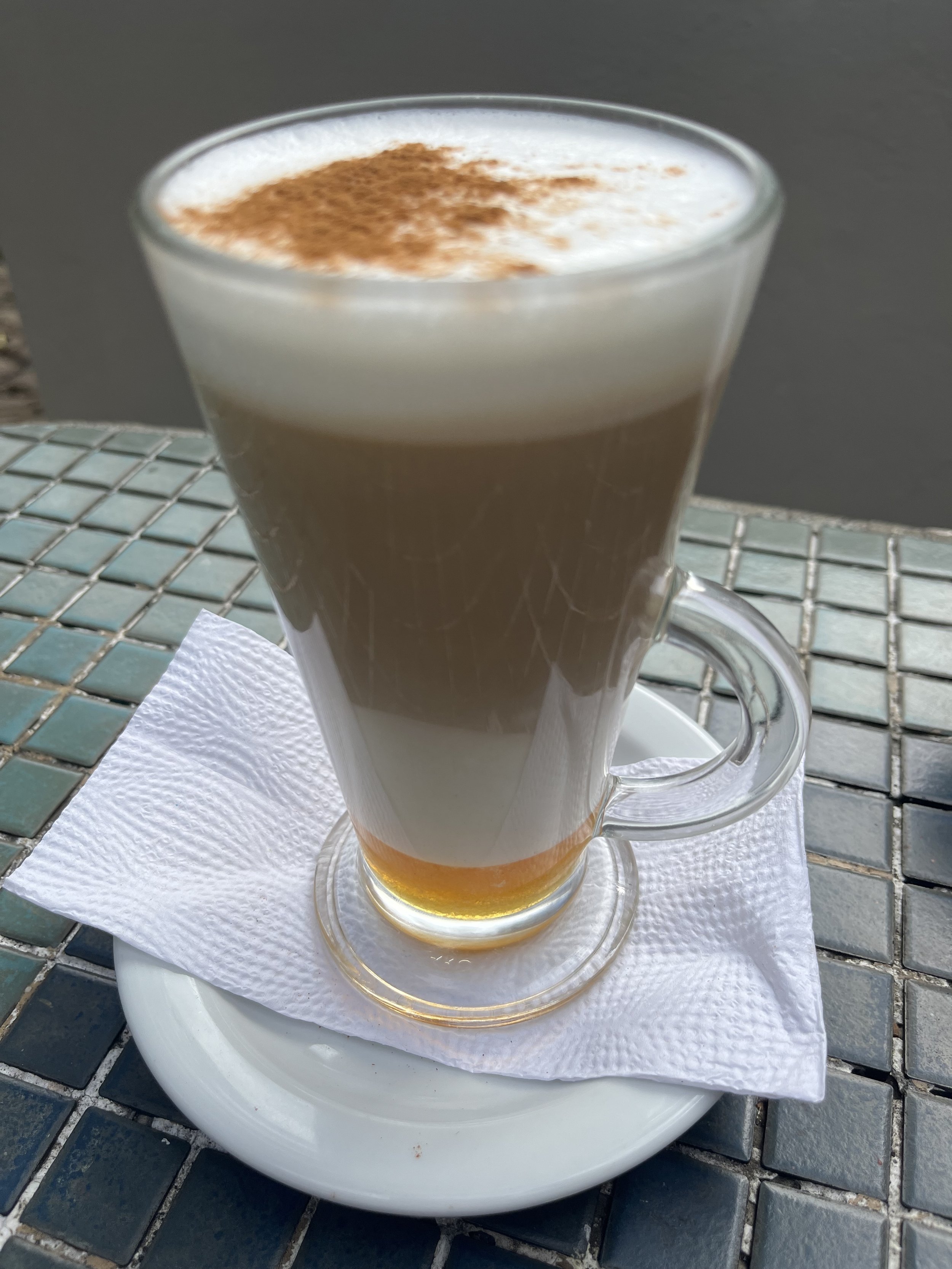
The ritual: Café Miel at Pan y Paz. Layers of rich, locally sourced Nicaraguan honey beneath high-altitude specialty beans and perfectly frothed foam. This mosaic-tiled table became my morning headquarters—a sanctuary of "Bread and Peace" before the heat of the day took over. Photo by stepbold.co | @lateinlifecareers