
Can You Carry What You Packed?
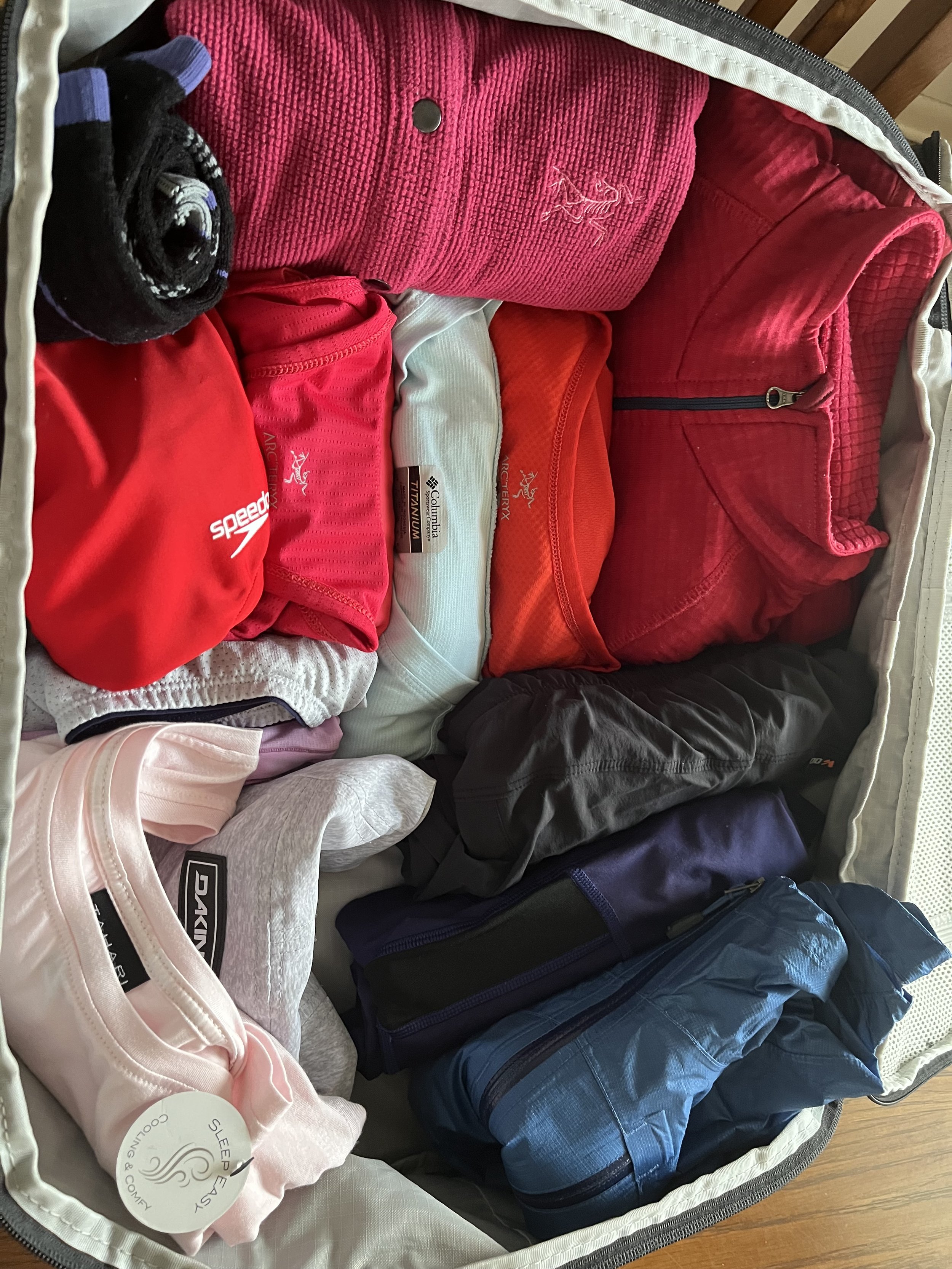
Everything in the photo. One Tortuga backpack. The full list is below.
A driver holding a sign with your name on it at the airport arrivals curb opened the back door. No baggage carousel. No waiting. As the car pulled away from the terminal, you caught a last glimpse of your flight seatmates through the glass — heaving, wrestling, waiting for their bags to appear on the belt.
Well done.
Light Packing Isn't Minimalism. It's a Safety Calculation.
If you arrive in Central America without the stamina to carry your bag, walk uneven terrain for hours, think clearly when things go sideways, and stand your ground with a cab driver running a tourist play — the experience is diminished at best and unsafe at worst. Know your physical limits. Build toward this. Then come.
The Capsule
A capsule is the underpinning of light travel. When you are far from home and on your own, the right core pieces mean you are dressed for whatever the day produces — without thinking about it. I found my Arc'teryx on eBay and my Columbia pieces at my preferred thrift stores. Both brands are lightweight and quick-dry, built for the pack-less-wash-more traveler. Both hold up against demanding terrain, saltwater, and sun exposure.
When a tour guide van picks me up at 5 a.m. for a volcano climb, I wear a Columbia tee base layer and light fleece. Warm in the morning twilight, dry on the ascent. Arc'teryx — sleek and minimal — works along shorelines, through forests, and at the kind of local restaurants you find by following someone's recommendation rather than a map. Don't want pre-owned? Put "NWT", new with tags in your eBay search.
Hiking footwear — the heaviest item — worn on the plane keeps me to the one-pair-of-shoes rule. A single pair of EVA Birkenstocks slips into my backpack, barely registering on the scale.
I am a luxury minimalist traveler. Most of my stays in Central and South America are budget-friendly surf camps, hostel private rooms, or simple guesthouses — close to the action, uncomplicated. My draws are surf sessions, volcano climbs, and cities where the Spanish colonial grid is still the actual city — not a preserved quarter, not a heritage district, just the streets as they were laid, still in use, with the central market visible at the end of them. Every so often I treat myself to a property that feels indulgent without the price tag to match.
A small number of trusted pieces covers every situation. Laundry is effortless. Packing and unpacking take minutes. That calm and control let me sleep better on the road. The rest of my attention goes where it belongs: the waves, the terrain, the views, the people.
Rolling or Carrying
I was a rolling suitcase early adopter. I endured cracked wheels, stairs, and broken terrain with steadfast loyalty. One too many cobblestone streets — wheels announcing tourist at every step — and I was done. With a Tortuga travel backpack, I move differently. Hands free to board a bus, sip coffee, buy a fare, monitor alerts. I move faster through crowds. I samba through turnstiles.
Never Mirror Someone Else's Packing List
Are you as nosy as I am? Packing lists are all over Pinterest — and they carry the same low-grade thrill as rifling through a house party host's medicine cabinet. Useful. Occasionally alarming. Never quite yours.
Only you know how often you'll sink-wash your delicates and your limit of consecutive days in the same tee.
Get your bag out a month before you depart. Spread your gear on the guest bed. Remember what you carried last trip and never touched — mascara for the beach, too many heavy books, the selfie stick. Identify the heaviest items and ruthlessly cut them. Pack up. Weigh in and check against airline limits. Then carry your bag around the block. Climb stairs. Heave it overhead. Is this what you will lug through airports, up metro stairs, across cobblestones, in and out of cabs? Clack, clack, clack.
Now, thieves. Thieves are opportunists. They size you up when you stop in exhaustion and make their calculation. You didn't grind away at your job and live carefully, decade after decade, to let this happen. When you are forced to stow your bag in the designated luggage section of a bus, your Apple AirTag should already be tucked in its hiding place, tracking every movement from your phone. Stay light, stay in control.
One more thing the light packer needs: a six-foot braided rubber clothesline that weighs almost nothing. If you pack light, you sink-wash. Five minutes in and everyone else's rooms are a dirty laundry hellscape. Not yours. I've stretched mine across balconies of luxury hotels, hidden from view, speed-drying my swimsuit in the ocean breeze. It strings up anywhere — microfiber towel, wet gear, improvised privacy screen.
The 80/20 Rule
Pack for the environments you'll be in most of the time. On a surf trip: swimsuit, rash guard, water leggings. Then three tees, one pair of shorts, one beach dress. The beach dress goes on as a coverup when I crawl out of the ocean, ravenously hungry, ready for lunch. That's my 80 percent.
Glam dress for a high-end restaurant? Leave it at home. An unplanned night out with new friends calls for the right clothes — they show respect for your hosts and make you feel like yourself. If the occasion truly demands, you could shop — but I never do. At home, anticipating a reward, clothes shopping releases dopamine. On the road, the terrain does that work far more efficiently than any shop.
Can We Talk Underwear?
Travel underwear is great in theory — quick-dry, comfortable, functional. Not all of us will justify forty dollars for knickers. I partake in my fair share of splurges, but my unmentionables are Walmart Hanes Women's Cool Comfort Microfiber Briefs — $18.97 for a ten-pack. No packing straight out of the package without a trial wear and wash from home. Just like with men — establish trust before going away together.
Disposable underwear? No. Do you really want to be the traveler from the rich country who creates trash for her hosts? Would you want your hostess to visit you and toss her abandoned undies in your backyard? I didn't think so.
If you want to lighten your bag before heading home, do it without burdening overworked cleaning staff. My thrift tees will still have good wear in them. Close to departure, laundered items left at the front desk of a busy hostel go to women travelers on shoestring budgets who appreciate something fresh and well-made.
When I visited an ecolodge in Ecuador's Amazon, I showed my guide what I wanted to leave behind. He needed a replacement water bottle, accepted mine, and passed my repellent and sunblock along to the next group of guests. Asking instead of dumping is the difference between generosity and entitlement.
You Are Worthy of Fine Clothes
You worked and budgeted your entire adult life. Buy what you want. Build a travel capsule and know you are prepared for any activity, any weather, any terrain. Packing light is freedom. With less to carry, you are deft and safe.
Thinking you could never pack that little? Yeah, you can. Now go.
Exactly What Fits in One Tortuga Backpack
Clothing
Columbia button-down, roll-up sleeve blouse
Packable rain jacket
Thermal base layer
Arc'teryx thermal top
Light fleece vest
Light fleece gloves
Arc'teryx hooded insulated hiking jacket
Arc'teryx leggings — full leg, adjustable to below the knee or ankle depending on sun exposure
Arc'teryx tank with built-in bra
3 Arc'teryx or Columbia tees
Arc'teryx shorts — cut below the calf for sun protection
Sleep shorts
1 sleep tank
Cover-up dress
Ocean wear: swimsuit, rash guard, water leggings
4 pairs Hanes Cool Comfort Microfiber Briefs
Fast-dry sports bra
Wide-brimmed hat
Footwear
Hiking boots or shoes — worn on the plane
EVA Birkenstocks
Gear
Wise Owl Outfitters Microfiber Camping Towel
Braided travel clothesline — no clothespins needed
Biodegradable travel laundry soap sheets
Apple phone dry bag
Lululemon belt bag
Apple AirTag — tucked into tightly folded wool socks
What's the one item you cannot leave home without? Drop it in the comments — I'm always looking to refine the list. And if this convinced you to ditch the rolling suitcase, pass it along to someone who's still dragging one.
“Pack light. Step bold. Feel deeply.”
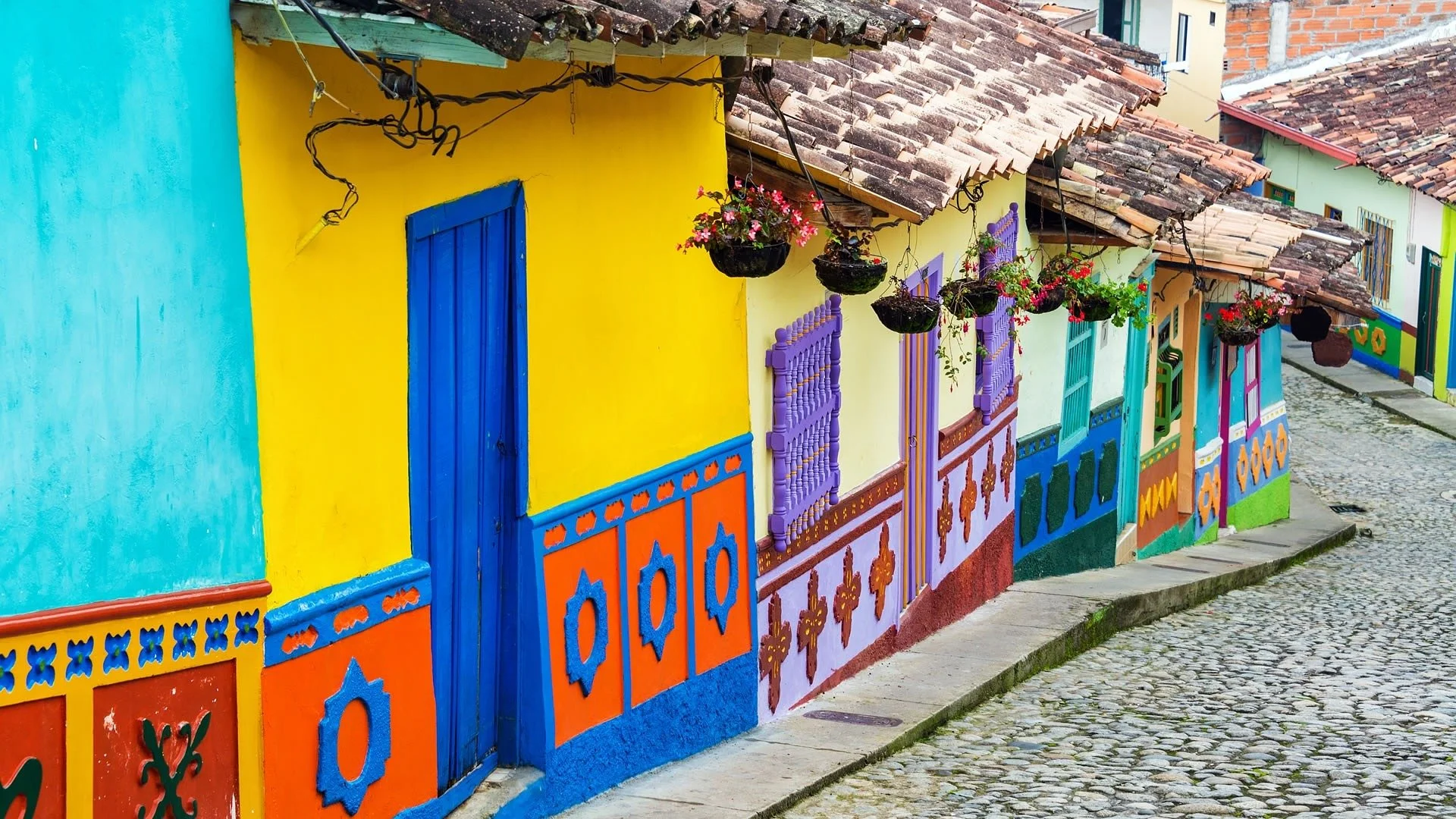
Navigating the severe inclines of La Candelaria Bogota, Colombia, consumes significant physical energy. If you are exhausted from climbing steep streets, your reaction time slows down, making you a more vulnerable target for opportunistic criminals.
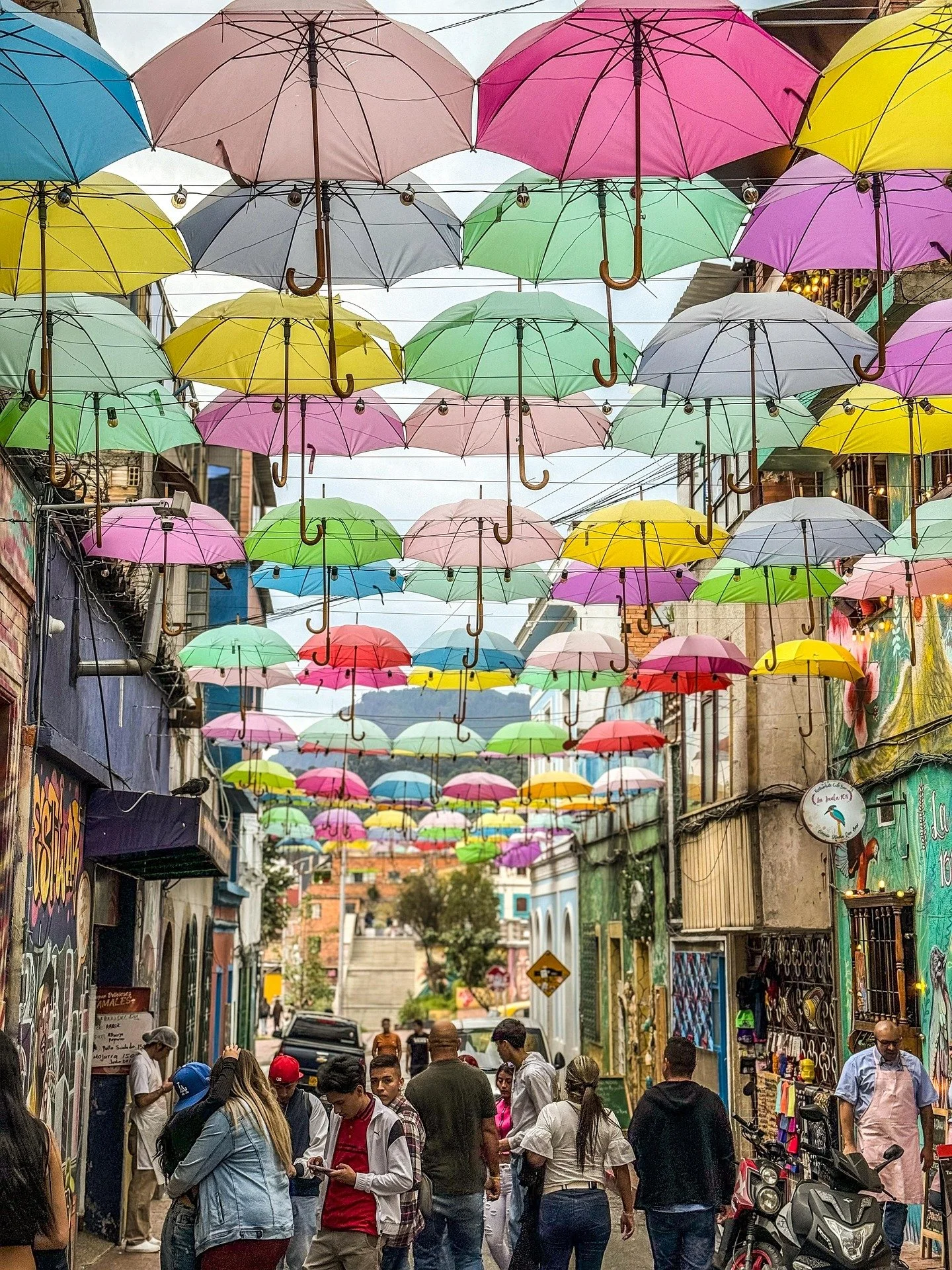
Calle de las Sombrillas (officially Carrera 2) and the surrounding La Candelaria historic district are widely considered high-risk areas for petty crime, pickpocketing, and muggings. The writer can attest that the street is enchanting and heavily visited by tourists during the day, but it requires a high degree of situational awareness.

Santuario Nuestra Señora del Carmen (Shrine of Our Lady of Carmen). Bogotá sits at an altitude of approximately 2,640 meters (8,660 feet). If you are not acclimated mental fatigue and disorientation are common side effects of altitude sickness. Being lightheaded compromises your intuition and judgment, making it harder to recognize a brewing safety hazard or a predatory scam.
A solo traveler who is winded and visibly struggling to breathe stands out. Criminals frequently target individuals who appear physically weak or distressed, as they are less capable of fighting back or pursuing a thief.
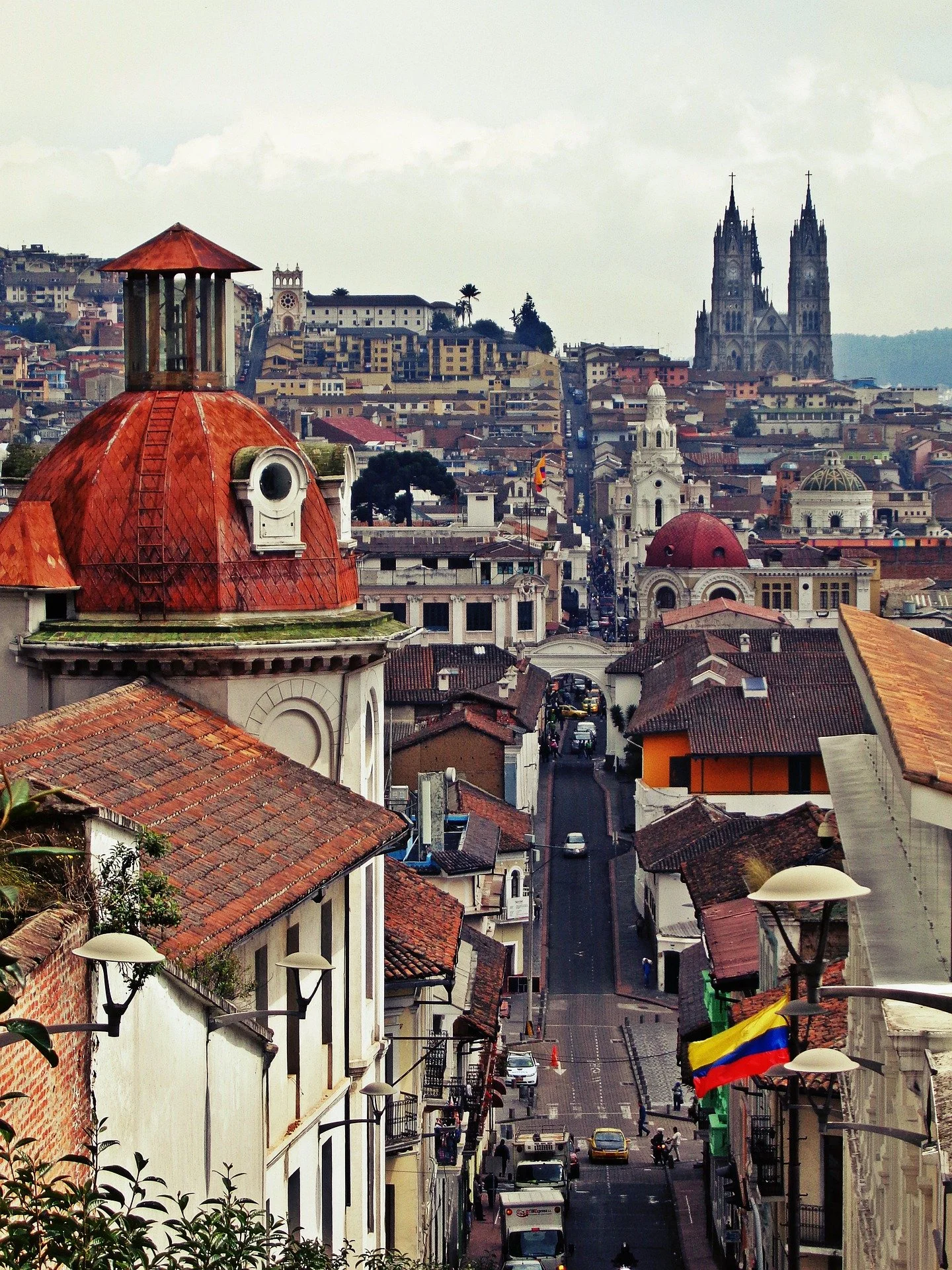
Navigating the severe inclines of Quito, Ecuador, 2,850 meters (or 9,350 feet) consumes significant physical energy. If you are exhausted from climbing steep streets, your reaction time slows down, making you a more vulnerable target for situational offenders.
Avoid heels or flimsy sandals on steep, slick, and uneven cobblestones. Slips and ankle injuries severely limit your ability to walk quickly or run away from a threat.
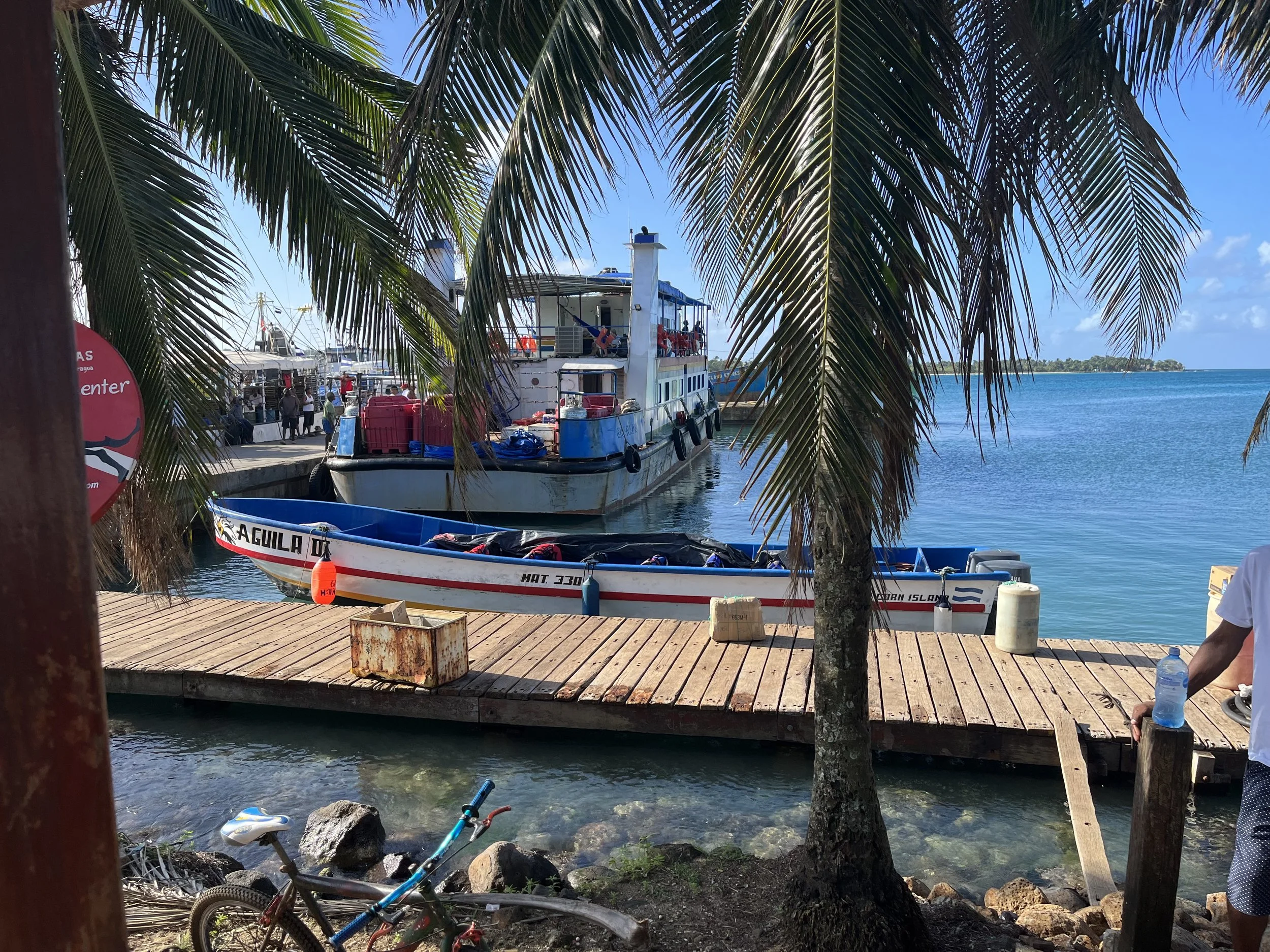
The panga is an open, fiberglass skiff—long, narrow, and low-sided, powered by one or more outboard motors. It carries 20–40 people (sometimes more), sitting on narrow wooden benches.You stow your gear—ideally in a trash bag because it will get wet—and squeeze in. The engine rumbles to life with a throaty roar, and you push off from the calmer waters near Big Corn Island, Nicaragua. Once you leave the shelter of Big Corn, you hit the open Caribbean Sea for the roughly 8-mile (13 km) crossing to Little Corn Island.The boat doesn't glide smoothly—it slams and bounces. Locals were unfazed. The rest of us were terrified. And grateful we packed light.